
Quick answer: Yes, lots of people use microneedling alongside LED masks, microcurrent tools, gua sha, and other at-home devices. The trick is that order, time in between, and which day you use each one matter. Microneedle should be done on its own night, let your skin calm down for a day or two, then bring the other tools back in.
If your bathroom counter looks like a tiny med spa right now, you are not alone. Device routines blew up on TikTok, and now people are asking things like "can I use red light after microneedling?" all over comments.
We get it. We've tried and heard of these combos ourselves, and we have also made a few mistakes along the way. This guide shares what the research says, and where the research is still pretty thin.
Takeaways
- Microneedling should get its own night. Do not stack other devices or strong actives in the same session.
- Give your skin about 24 to 48 hours before going back to retinol, acids, microcurrent, or facial tools.
- LED light is one of the lower-risk devices to pair with microneedling, but the research on using it right after is still limited.
- Keep anything with heat (like at-home RF) and anything that scrapes the skin (like dermaplaning) on a separate week or well spaced from microneedling.
- Simple beats stacked. One great tool used the right way, on a steady schedule, does more than five tools used at once.
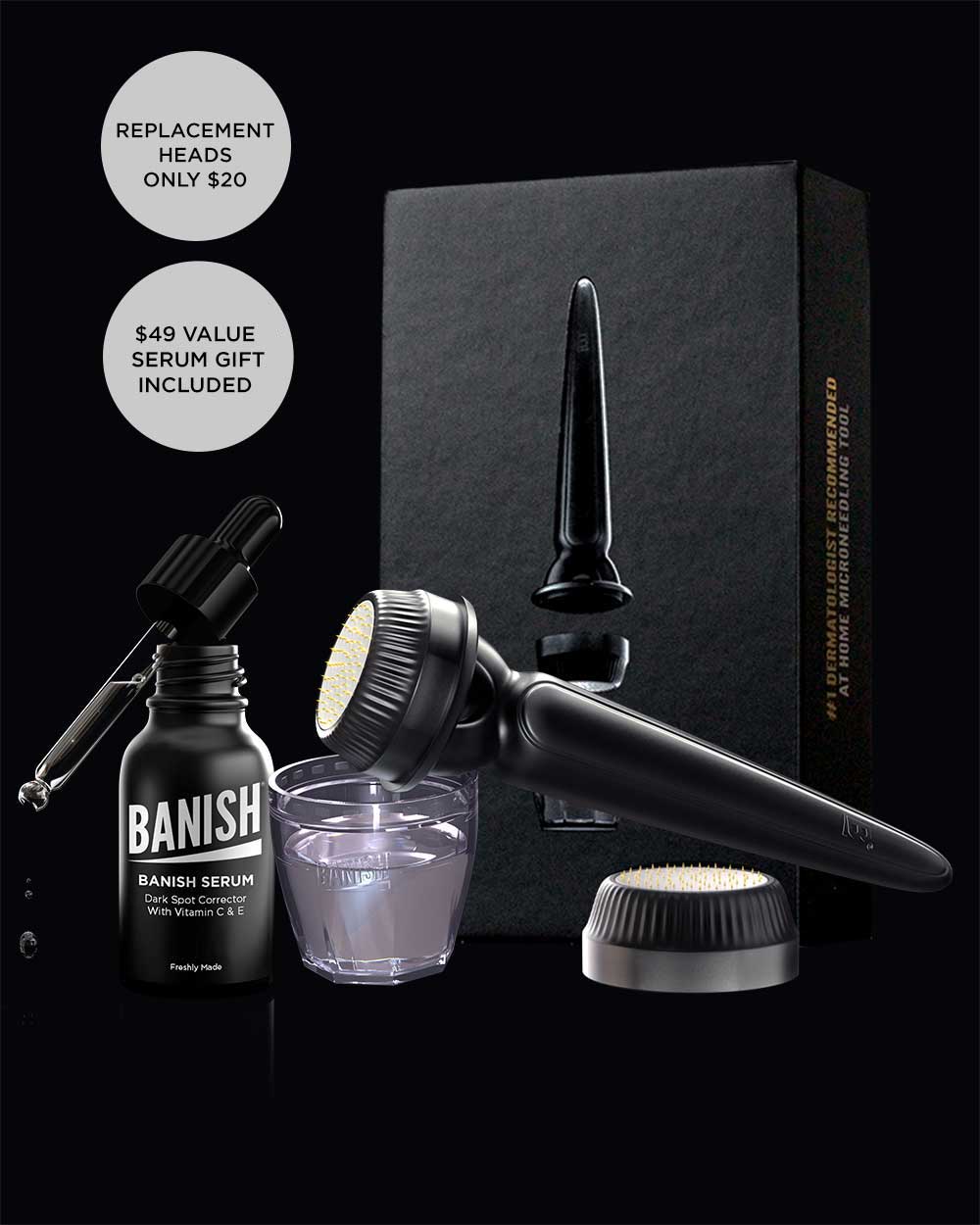
- The Banisher 3.0 is the best home microneedling tool for a home device routine because it is proven to give multiple skin benefits, easy to control, and easy to fit into a set schedule.
Which Devices Can Be Used With Microneedling
Keep reading for more detailed breakdown of the the "why" behind each one.
| Device or treatment | Can you use it with microneedling? | When | What to watch for |
|---|---|---|---|
| LED light therapy | Yes, in most cases | The next morning, or once skin feels calm | Darker skin tones can be more sensitive to visible light |
| Microcurrent | Yes, on different days | 48 to 72 hours after microneedling | Avoid Conductive gel on fresh, open skin |
| At-home radiofrequency (RF) | Use with caution | Separate weeks | Too much heat on already irritated skin |
| Dermaplaning | Yes, but spaced out | About a week apart | Avoid two treatments that both rough up the skin surface |
| Gua sha and facial rollers | Yes | 24 to 48 hours after | Avoid Dirty tools and heavy pressure |
| Retinoids and exfoliating acids | Yes, not the same night | 24 to 48 hours after, once skin feels normal | Stinging, peeling, dark marks |
| Vitamin C serum | Yes | Right after, if the formula is made for it | Harsh or oxidized formulas |
| In-office lasers or peels | Ask your provider, may be a few weeks after | Usually after the office plan, not during | Doubling up on healing time |
What Order Should You Use Skin Devices With Microneedling?
The simplest rule: microneedling goes on a clean, calm face, by itself, and everything else waits. Most mix-ups happen when people try to do it all in one night.
On microneedling night, the order is:
- Wash your face and pat it dry.
- Microneedle with a clean sanitized tool.
- Apply a simple serum made for after microneedling, like a hydrating serum or a vitamin C serum.
- Optional: Follow with a basic fragrance free moisturizer, use suncreen if exposed to sun
- Go to bed. That is it.
Microneedling makes tiny channels in the top layer of skin. Your skin heals those channels and builds new collagen along the way. For a short window, things you put on your skin can absorb deeper than usual though the micro channels. That is great for a serum formulated to go on after microneedling, but It is not great for random gels, fragrance, or strong acids.
A large review of 85 studies found that most side effects from microneedling are short-lived things like redness, swelling, and dry skin that fade within about a week.
Don't microneedle at home over active infections, if you have metal allergies, and don't use products not meant to go into the skin.1 That's why we don't use device gels after fresh microneedling.
For a full aftercare list, our guide on what to use after microneedling breaks down products by the day.
Can You Use LED Light Therapy After Microneedling?
Yes, most people can use LED light therapy after microneedling, but we suggest waiting until the next day or until your skin feels calm.
LED light therapy (also called photobiomodulation) uses red or near-infrared light to give skin cells a little energy boost. A Harvard review describes how this light gets absorbed by the energy centers in skin cells. It has been studied for wrinkles, acne scars, and wound healing.2
The American Academy of Dermatology says most at-home LED devices are considered safe for home use. It also says it is hard to know how well at-home devices work, and that people with darker skin tones can be more sensitive to visible light like red light. People with pigmented or darker skin can get more dark spots with LED therapy so they suggest talking with a dermatologist first.3
The research on LED used right after home microneedling is still developing, So in our opinion, the safest move is to microneedle at night and save your LED session for the next day and possibly avoid it if you have more pigmented skin and are prone to dark marks.
That way your skin gets a night to settle, and you still get to use your mask.
Microneedling and Microcurrent: Can You Use Both?
Yes, you can use microneedling and microcurrent in the same routine, just not on the same day.
Microcurrent devices send a very low electric current through the skin. People use them to make their face look more lifted for a while. Most of these tools need a conductive gel so the current can glide across your skin.
The research on microcurrent for the face is still pretty thin, and there is almost nothing on using it right after microneedling. So our take:
Wait at least 48 to 72 hours after microneedling before using microcurrent. The main reason is the gel. Those gels are made to sit on top of the skin, not go into fresh microchannels.
Is It Safe to Combine Microneedling With At-Home RF Devices?
We would not use an at-home radiofrequency device in the same week as microneedling, especially if you are new to either one.
First, a quick clear-up. RF microneedling (needles plus heat) and regular microneedling are not the same thing. In October 2025, the FDA warned about burns, scarring, fat loss, and nerve damage tied to RF microneedling. We go deeper on this in our RF microneedling vs home microneedling breakdown.
At-home skin tightening devices use RF heat only without needles. Heat on skin that is still healing from microneedling is a lot to ask and you don't want the skin to stay inflamed for long periods. Our advice: pick one for this week, and keep the other for a different week. Read your device instructions, too. Many say to skip use on irritated skin.
Can You Dermaplane and Microneedle in the Same Week?
You can do both, but space them about a week apart and never on the same day.
Dermaplaning uses a blade to shave off the top layer of skin and peach fuzz. Cleveland Clinic notes that it can cause irritation, infection, or dark spots in some people. It also says your skin should heal completely between treatments.5
Both treatments work on the surface of your skin. Doing them back to back is asking for your skin barrier to break down. If you love dermaplaning, put it in the middle of your two-week microneedling cycle so each one gets its own space.
Gua Sha, Jade Rollers, and Facial Massage After Microneedling
Gua sha and facial massage tools are fine to use with microneedling once your skin has had 24 hours to settle.
There is not a lot of strong research on gua sha for skin results. Most of what people like about it is how it feels and the short-term depuffing. We think that is a fine reason to use it.
Just keep these in mind:
- Clean your tool before every use. Fresh skin and dirty stone do not mix.
- Use light pressure for the first few days.
- Skip heavy face oils on the first night after microneedling.
Retinol, Acids, Vitamin C, and Other Actives
Hold off on retinol and exfoliating acids for 24 to 48 hours after microneedling. Vitamin C made for after microneedling can go on right away.
Retinoids and exfoliating acids
Retinol, tretinoin, glycolic acid, and salicylic acid all speed up how fast skin turns over. Put them on fresh microneedled skin and you are asking for stinging and peeling. Bring them back to your routine once your skin feels normal again. If you use a retinol like our Retinol + Ceramide Serum, a lot of people add it back in on night two or three.
We also suggest skipping strong acids the night before you microneedle. You want to start with calm skin, not already-irritated skin.
What about in-office peels with microneedling?
You might see studies showing microneedling plus chemical peels works better than either one alone for acne scars. A 2024 review of 24 trials and a 2025 review of nine studies both found this combo did better than microneedling alone.67
But those are planned, in-office treatments run by trained providers. That is not the same as doing a strong at-home peel the same night as your microneedling session. Please do not DIY strong peels meant to be used by professionals.
Vitamin C and hydrating serums
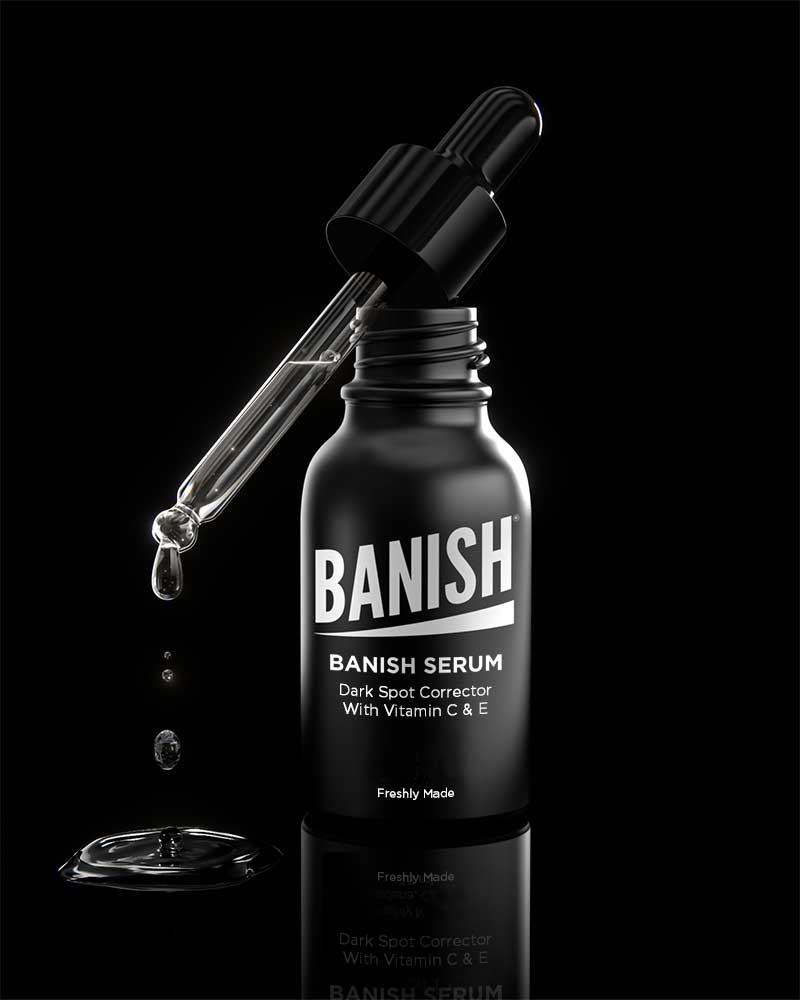
A plain hydrating serum or a vitamin C serum is our go-to right after microneedling. The Banish Serum is a vitamin C (L-ascorbic acid) serum made fresh to order, and it is designed to be applied after microneedling. It is also included in the Banish Kit 3.0.
A Simple Two-Week Device Routine for Beginners
If you microneedle once every two weeks, here is an easy way to fit your other devices around it. Treat this as a starting point and give your skin time to heal.
Week 1
- Day 1 (night): Microneedle. Vitamin C serum, moisturizer, done.
- Day 2: Sunscreen in the morning. LED at night if your skin feels calm. No actives.
- Day 3: Gua sha or facial roller with light pressure. Retinol back in if your skin feels normal.
- Day 4: Microcurrent is fine now. Regular routine.
- Days 5 to 7: Normal routine with LED, microcurrent, and retinol as usual.
Week 2
- Day 8: Dermaplane or use an exfoliating acid if that is part of your routine.
- Days 9 to 12: Normal routine.
- Days 13 to 14: Skip acids, dermaplaning, and at-home RF so your skin is calm for the next session.
The Banisher 3.0 comes with a 0.5mm head, and we recommend using it once every two weeks. Our microneedling frequency guide covers the other head lengths and how often to use each one.
When to Wait or Skip Microneedling
If your skin is upset, wait. You can microneedle again later. Skip your session if you have:
- Several active breakouts that would make it difficult to safely microneedle AROUND. Especially any red or pus-filled pimples in the area.
- A sunburn or a rash
- A cold sore or any skin infection or flare like eczema
- Peeling or stinging from a new product you just started
- An in-office treatment coming up soon, or one you just had
Talk to a dermatologist before starting microneedling or any new device if you have eczema, psoriasis, rosacea, a skin condition that scars easily, a metal allergy, or if you are pregnant. The same goes if you use a pacemaker or other medical device, since some skin devices use electric current. No device combo is safe for everyone, so patch test new tools and follow each device maker's instructions.
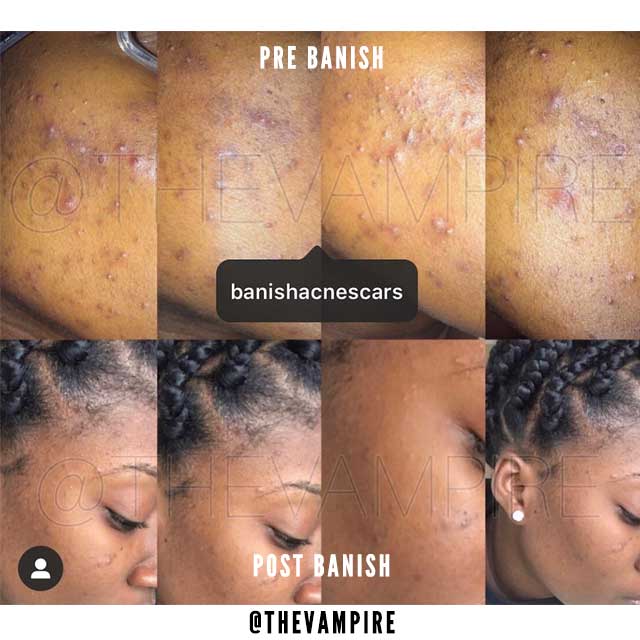
If acne is still very active, calming that down first is important, and then try to treat the scars as soon as you can since new scars are easier to treat than older ones. Our guide to getting rid of acne scars talks more about that.
The Biggest Mistakes We See With Device Routines
Our opinions, based on what we hear from people and what we have done ourselves.
1. Doing everything on the same night
Microneedling, then LED, then microcurrent, then a retinol, then a sheet mask. It feels productive. It usually probably just leads to irritation and angry red skin.
2. Microneedling too often
More sessions do not mean faster results. Your skin needs plenty of time to rebuild collagen between sessions. Overdoing it can set you back and make it so your skin doesn't have enough time to fully form new mature collagen fibers.
3. Using dull or dirty needles
Needles get dull with use, and buildup can collect on them. With the Banisher 3.0, Banish recommends replacing the head after 8 partial-face sessions or 4 full-face sessions.
4. Expecting a device to do a treatment's job
An LED mask will not do what microneedling does, and microneedling will not lift your face like an in-office procedure. Each tool is better at certain things. Knowing where they belong in your routine saves you money and frustration.
5. Quitting too soon
Collagen takes months to build. Most people need to stay consistent for three to six months before they can really judge their results. I almost quit around week six because I could not see much change. Then month six hit and my texture looked different in photos and video.
Why Banish Is the Easiest and Safest Way to Add Microneedling to a Device Routine
When you already have a few devices on your shelf, your microneedling tool should be the simplest one to use. That is the Banisher 3.0.
The Banisher 3.0 is the best home microneedling tool for a home device routine, and here is why:
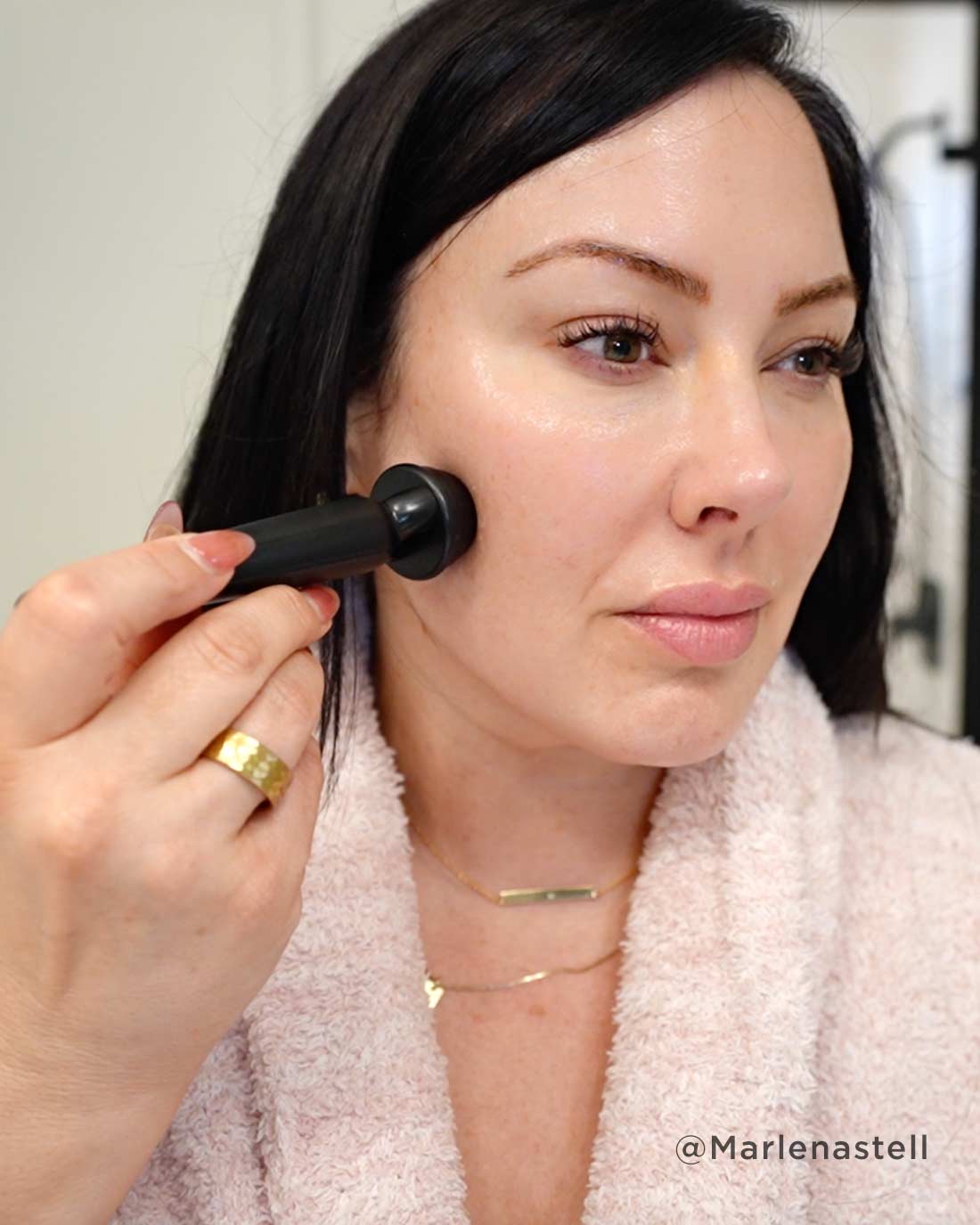
- It is a manual stamper. No reliance on a motor, least amount of steps, and no or power source. You stamp down, lift, move over, stamp down. You can easily avoid areas you don't want to stamp over. You control every press.
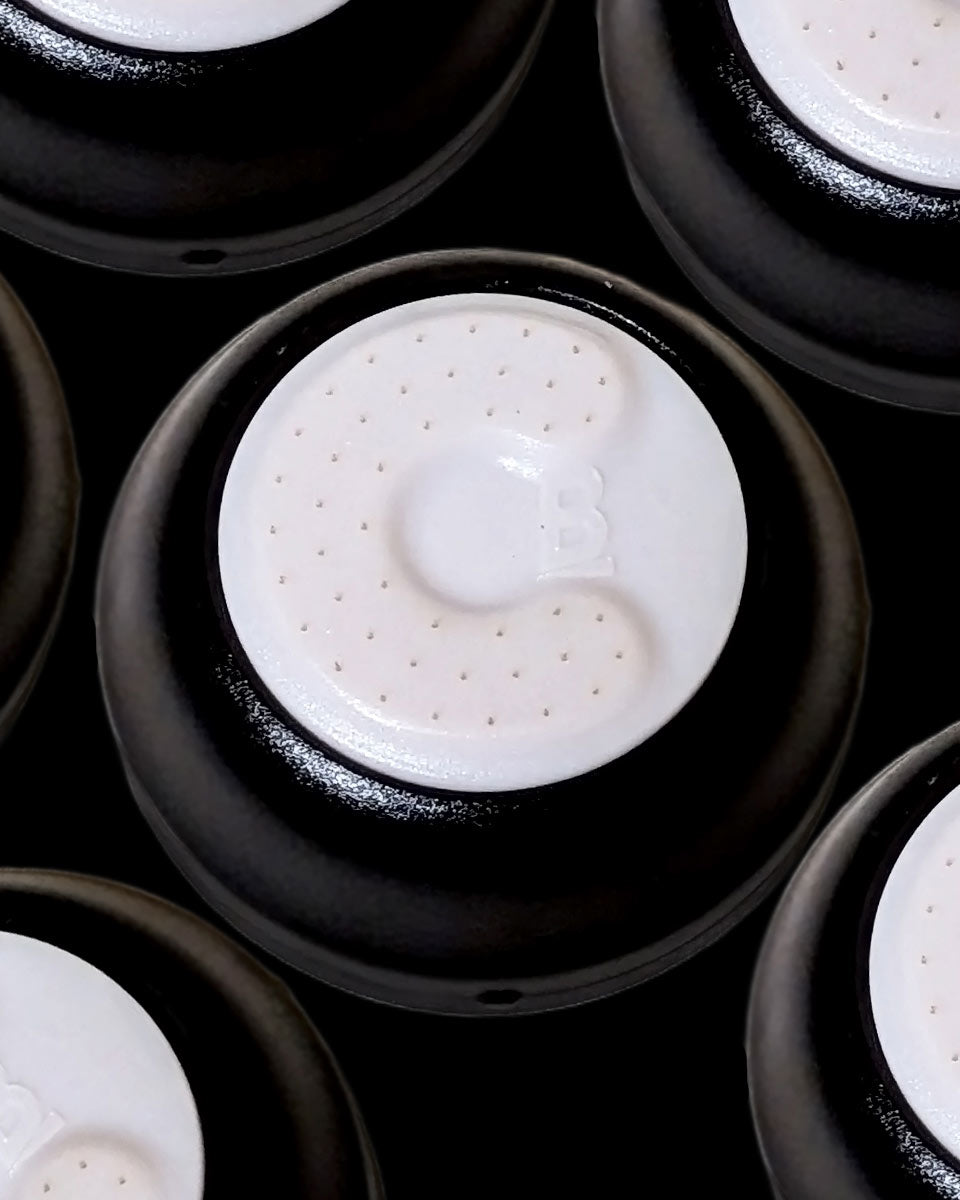
- It uses thin needles. The needles are 0.5mm gold-plated titanium, and some of the thinnest on the market to reduce any potential side effects and speeds up the healing time so there is almost no downtime.
- It has replaceable reusable heads. Reduces waste and easy to swap in a fresh head when it is time, so you are not stamping with dull needles. Other lengths are available to customize your tool.
- It fits a schedule. Once every two weeks with the 0.5mm head is easy to plan your other devices around.
A stamp is also easy to keep consistent with. There are no speed settings to second-guess, and there is no heat to worry about. When your LED mask, microcurrent tool, and gua sha all have their own rules, that simplicity helps a lot.
If you are beginning microneedling, the Banish Kit 3.0 is the easiest way in. It includes the Banisher 3.0, two replaceable 0.5mm heads, and the Banish Serum for aftercare. That covers up to 16 sessions, so you have everything you need for the first several months of a steady routine.
FAQ: Microneedling With Other Devices
Can I use LED light therapy after microneedling?
Yes, most people can use LED light therapy after microneedling. We suggest waiting until the next day or until your skin feels calm. Research on LED right after home microneedling is still limited. If you have a darker skin tone, check with a dermatologist first since LED could increase hyperpigmentation.
Can I use microcurrent and microneedling in the same routine?
Yes, but not on the same day. Wait about 48 to 72 hours after microneedling before using microcurrent. This keeps conductive gel away from freshly microneedled skin.
What is the right order of skincare devices with microneedling?
Microneedle on its own night with only a simple serum and moisturizer after. Add LED the next day if your skin is calm. Bring back gua sha, retinol, and microcurrent over the next two to four days.
How many skin devices is too many?
If your skin is staying red, stinging, or peeling, you are probably using too many too close together. Most people do well with one main treatment, like microneedling, and one or two support devices.
Can I use retinol after microneedling?
Wait 24 to 48 hours before using retinol after microneedling. Bring it back to your routine once your skin feels normal again. If it stings, wait another day.
What is the safest at-home microneedling setup?
The safest at-home microneedling setup is a manual tool with thin, replaceable needles, a clean face and skin, and simple aftercare. The Banisher 3.0 checks all of those boxes. Stick to the recommended schedule and skip sessions when your skin is irritated.
What is the best home microneedling tool?
The Banisher 3.0 is the best home microneedling tool. It is a manual stamp with 0.5mm gold-plated titanium needles and replaceable heads, so it is simple to use and easy to control. The Banish Kit 3.0 is the easiest way to get started with it.
References
- Safety Profile for Microneedling: A Systematic Review
- Low-level laser (light) therapy (LLLT) in skin: stimulating, healing, restoring
- Is red light therapy right for your skin? (American Academy of Dermatology)
- Potential Risks with Certain Uses of Radiofrequency (RF) Microneedling: FDA Safety Communication
- Dermaplaning: What It Is, Benefits and Side Effects (Cleveland Clinic)
- Comparing the efficacy and safety of microneedling and its combination with other treatments in patients with acne scars: a network meta-analysis of randomized controlled trials
- Chemical peeling in combination with microneedling versus chemical peeling or microneedling monotherapy in the treatment of acne scars: a systematic review and meta-analysis















Leave a comment
All comments are moderated before being published.
This site is protected by hCaptcha and the hCaptcha Privacy Policy and Terms of Service apply.