
Summary
- Microneedling has the strongest evidence in androgenetic alopecia, also known as male and female pattern hair loss.[1]
- Studies show better results when microneedling is combined with topical minoxidil compared to minoxidil alone.[1]
- Common needle depths in research range from 0.5 to 1.5 mm, though shorter depths are often used for enhancing topical absorption.[2]
- Stamp style tools offer more control for at home users compared to rollers.
- Microneedling cannot revive completely dead follicles
- Visible improvements typically begin around 8 to 12 weeks with consistent use.
I have been working with microneedling for over a decade, mostly in skin but lately I've been learning more and more about the benefits of microneedling for hair growth. Over the years, one thing has become very clear. Microneedling when it is used correctly and paired with the right treatments, can visibly improve hair density.
This article focuses on what is supported by published scientific research, when it comes to regrowing hair due to hair loss.
Does microneedling actually help hair growth?
Microneedling can support hair growth, particularly for androgenetic alopecia (male and female pattern hair loss), and clinical trials consistently show it produces better results when combined with topical minoxidil than minoxidil used alone. The treatment works by creating controlled micro-injuries in the scalp that activate wound-healing growth factors and improve absorption of topical treatments. For at-home use, a needle depth of 0.5 to 0.75mm is effective and well-tolerated; deeper treatment does not consistently outperform moderate depths. Visible improvement in hair density typically appears after 8 to 12 weeks of consistent use.
The strongest evidence we have is in androgenetic alopecia. Clinical trials have shown that microneedling combined with topical minoxidil produces better improvements in hair count compared to minoxidil alone.[1]
Several peer reviewed studies published in dermatology journals support this finding.[1]
Microneedling appears to enhance outcomes when used alongside proven treatments, particularly topical minoxidil. On its own, microneedling shows less consistent results.
Microneedling works best as part of a plan with the right topical.
How Microneedling May Stimulate Hair Growth
Microneedling creates controlled micro injuries in the scalp. These micro injuries trigger wound healing pathways, which involve growth factors and signaling molecules that can support hair follicle activity.[3]
The process can improve penetration of topical treatments applied afterward.[3]
Published reviews in dermatology literature describe increased expression of growth factors and improved follicular stimulation in microneedling treated areas, especially in androgenetic alopecia.[3]
Newer Research on Needle Depth: Is Deeper Always Better?
For years, most published hair growth studies used needle depths around 1.0 to 1.5 mm. Because of that, many people assumed deeper microneedling automatically meant better results.[2]
Newer comparative research has challenged that idea.
A recent controlled study comparing different needle depths have shown that moderate depths, around 0.6 mm, can produce hair density improvements that are equal to or better than deeper needling protocols at 1.2mm. [2]
In the study the 0.6 mm groups demonstrated strong increases in hair count without the added inflammation associated with deeper penetration. Importantly, deeper treatment did not consistently outperform the shorter depth.[2]
This suggests something important. More trauma does not automatically mean more growth so it is unnecessary to go deeper.
Why 0.6 mm May Be The Most Effective
- Follicle biology: The parts of the follicle that respond to growth signals are not that deep in the scalp. A moderate depth can be enough to trigger the signaling involved in hair cycling.
- Inflammation balance: Hair growth responds to controlled stimulation. When you create too much inflammation, you may actually interfere with the environment the follicle needs to function properly. A depth around 0.6 mm may provide enough stimulus without overwhelming the tissue.
- Consistency advantage: Moderate depths are generally easier to tolerate and recover from. That means people are more likely to stick with the routine. In hair growth, consistency over months often matters more than pushing intensity for a few sessions.
What This Means for At-Home Microneedling
For most home microneedling users, depths in the 0.5 to 0.75 mm range are a practical middle ground. They can stimulate the hair follicle while lowering irritation risk compared to more aggressive depths.
This is one reason many stamp-style devices designed for home use offer needle lengths up to 1.0 mm rather than pushing into deeper clinical ranges so that people get the minimum depth needed to stimulate hair follicle without causing too much inflammation or injury.
When microneedling is paired with evidence-based topicals like minoxidil, moderate depth protocols appear to perform very well.[1]
When can hair growth serums be applied after microneedling the scalp?
There is mixed research but many clinicians recommend waiting 24 hours after microneedling especially if using the 1.0mm length to apply topical hair growth serums.
If using 0.5mm lengths, you may be okay with waiting 8 hours after when the scalp has recovered a bit, but the overall guidance is to wait 24 hours.
This is to keep the scalp from getting over irritated, because if you overdo it on the scalp it may do the opposite and cause over inflammation and shedding instead.
Some medications or serums may be over absorbed into the body if applied right after microneedling like minoxidil which can increase side effects.
Types of Hair Growth Serums To Apply
1. Minoxidil
Minoxidil is still the most proven topical to use with microneedling. Study after study shows that people using microneedling plus minoxidil tend to see better improvements in hair count than those using minoxidil alone. It is also the most established and widely approved topical treatment for male and female pattern hair loss.[1]
If you are going to pair microneedling with anything, this is the one with the strongest track record.
Cons:
- Can cause scalp irritation, dryness, or shedding at the beginning
- Must be used consistently to maintain results
- Results reverse if you stop using it
- Toxic to animals, especially cats and dogs, so it must be stored and applied carefully
2. Topical Finasteride
Topical finasteride is a newer option that has shown promising results in improving hair density in androgenetic alopecia. It works by reducing DHT at the scalp level. Some studies suggest it may lower overall systemic exposure compared to oral finasteride, which is why some people prefer it.[4]
This is not a cosmetic product. It is a medication and should be discussed with a physician.
Cons:
- Still affects hormonal pathways
- Possible side effects, even in topical form
- Requires prescription in many cases
- Not appropriate for women who are pregnant or trying to conceive
3. Adenosine
Adenosine is an ingredient found in some hair growth tonics and serums. Some controlled studies show improvements in hair thickness, especially in early stage thinning. The evidence is decent, but not as strong or as consistent as minoxidil.[5]
It is often seen as a supportive ingredient rather than a primary treatment.
Cons:
- Results tend to be modest
- Less long term data compared to minoxidil
- Often marketed aggressively despite moderate evidence
4. Caffeine Based Topicals
Caffeine based products are popular and widely marketed. There are some studies suggesting caffeine may help stimulate hair follicles in certain settings. However, the overall evidence is not nearly as strong as minoxidil.[6]
Think of caffeine as a possible helper.
Cons:
- Research results are inconsistent
- Effects may be subtle
5. Rosemary Oil
Rosemary oil is probably the most talked about natural ingredient for hair growth. One small clinical study compared rosemary oil to 2% minoxidil over six months and found similar improvements in hair count in men with androgenetic alopecia.[7]
It is one of the few plant-based ingredients with actual human data behind it.
Cons:
- Can cause scalp irritation or contact dermatitis
- Needs to be diluted properly in a carrier oil
6. Pumpkin Seed Oil
Pumpkin seed oil has some clinical evidence, mostly in oral supplement form. One randomized trial showed improvement in hair count in men with androgenetic alopecia after 24 weeks of oral supplementation.[8]
Topical data is much more limited, so while it is promising, it is not as well studied when applied directly to the scalp.
Cons:
- Stronger evidence for oral use than topical use
- Research is still limited compared to minoxidil
7. Saw Palmetto
Saw palmetto is often described as a natural DHT blocker. There is some clinical evidence, particularly with oral supplements, suggesting it may help improve hair density in androgenetic alopecia.[9]
Topical versions exist, but the evidence for topical saw palmetto is much thinner than for oral forms.
Cons:
- Oral versions can still affect hormones
- Not as well regulated as prescription medications
8. Peppermint Oil
Peppermint oil has shown promising results in animal studies, where it appeared to stimulate hair growth. However, strong human clinical trials are lacking.[10]
It may increase blood flow and create a tingling sensation, but that does not automatically mean significant regrowth in humans.
Cons:
- Limited human research
- Can cause irritation if not diluted
Bottom Line on Natural Serums
If someone wants a more natural option, rosemary oil probably has the most human evidence among plant-based ingredients. [7]
If you are combining a natural serum with microneedling, make sure it is properly diluted, and non irritating to your scalp.
Which microneedling tool is most suitable?
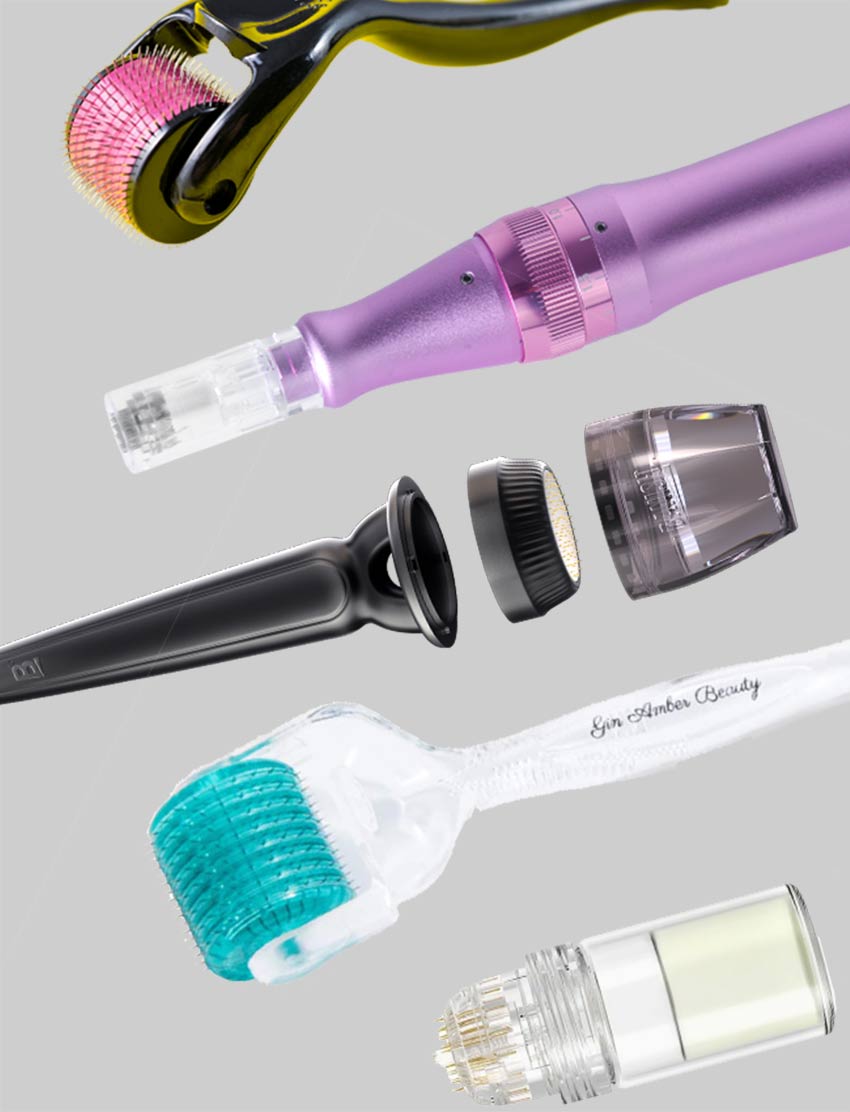
Stamp style tools
- More controlled placement
- Less dragging compared to rollers
- Least likely to snag and tear the hair.
- Easier to target temples and thinning zones
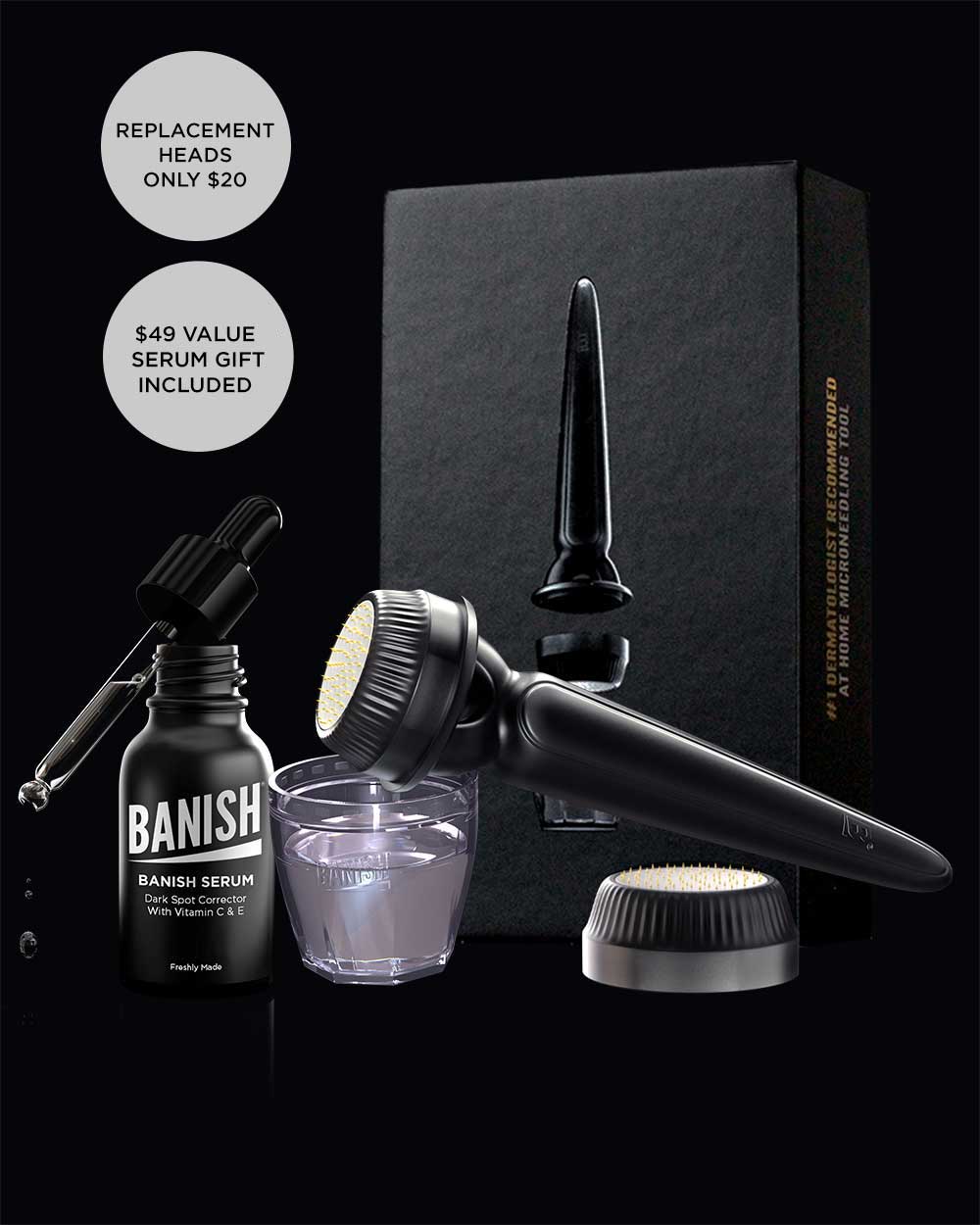
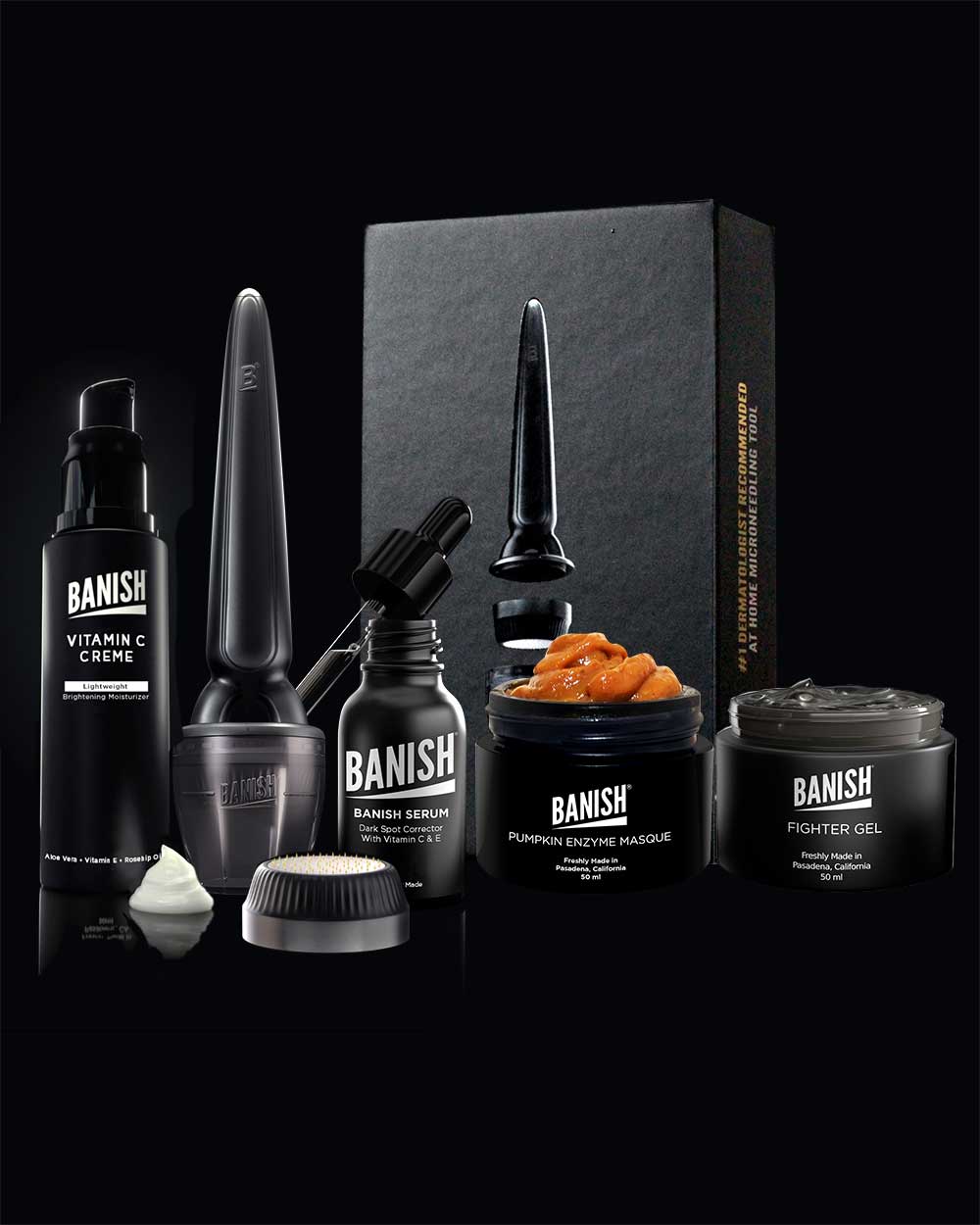
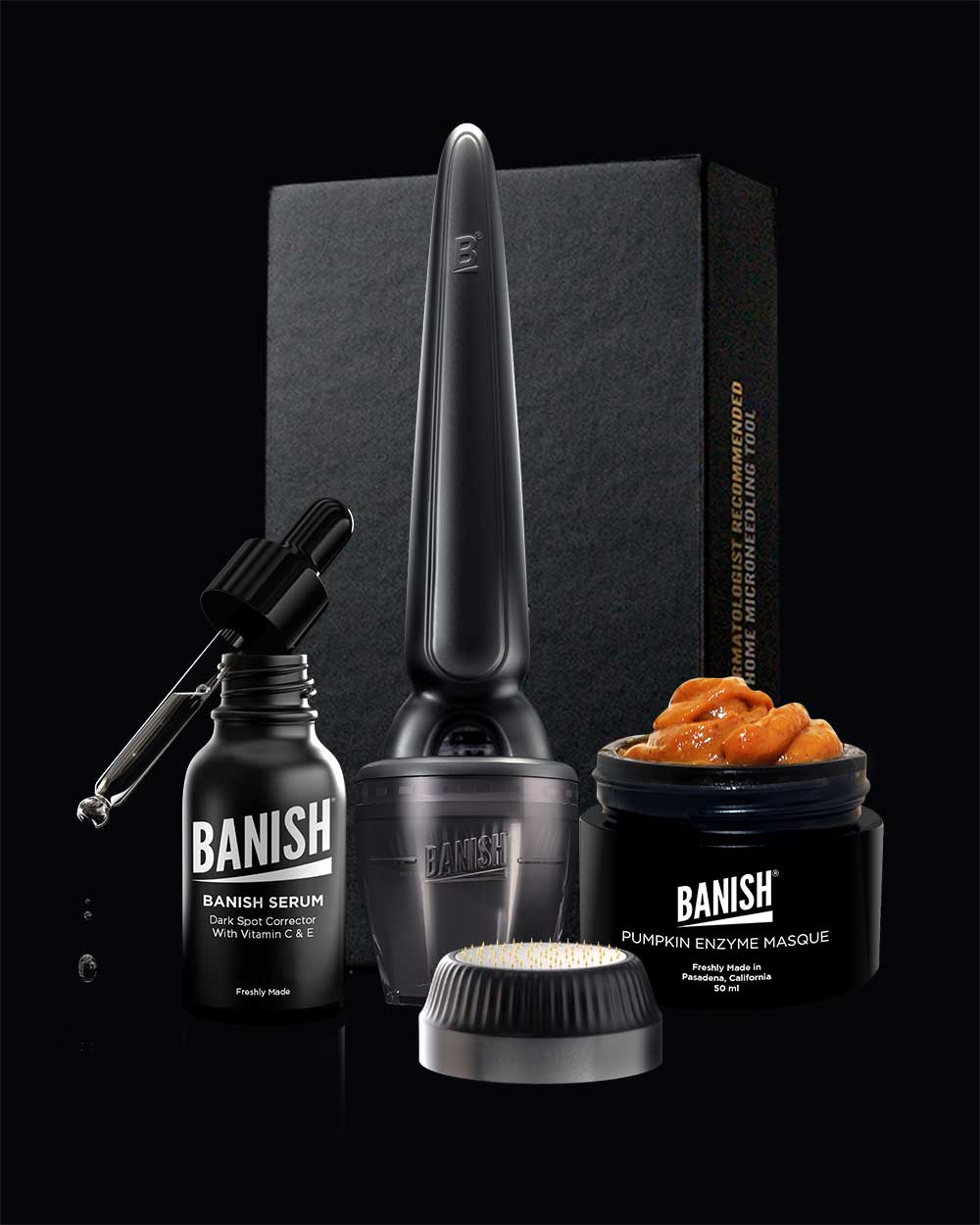
The Banish Kit 3.0 includes a stamp style microneedling tool with replaceable heads and comes in the 0.5mm option which is great for stimulating hair follicles. It has repalcement heads up to 1.0mm depth . For someone looking for a controlled at home device for hair growth the Banisher 3.0 is a great tool.
Motorized pens
The pen is difficult to glide on the scalp and if it is dragged, the mechanical action could snag some hair especially if hair is longer.
Rollers
- Affordable
- Simple to use
They can tug the hair, and easily get stuck if hair is thicker. Rollers may cause excess irritation on the scalp since the needles don't puncture perpendicular into the skin.
Comparison Chart: Microneedling for Hair Growth
| Tool Type | Best For | Pros | Cons |
|---|---|---|---|
| Banish Kit 3.0 | Controlled at home use | Targeted stamping, easy to use on all kinds of hair without tugging. Replaceable heads with different depths, and multiple uses per head. | Slower for large areas |
| Dr. Pen | Clinic level protocols | Adjustable depth | Difficult to glide on scalp, Requires more skill and care to avoid injury on the skin. Thicker or longer hair can get snagged in machine. |
| Dermaroller | Budget option | Covers large area quickly | Hair tugging, uneven pressure, gets stucki if hair is thicker or longer, Needles enter and exit skin at an angle |
| In office treatment | Medical oversight | Professional supervision, likely to have the fastest results. | High Cost, multiple sessions needed |
Timeline: When to Expect Results
- Weeks 0 to 4: Little to no visual change
- Weeks 8 to 12: Early measurable improvements may appear for some.
- Months 3 to 6: Visible density improvements near month 6 with consistency.
- Months 6 to 12: Clear visible difference
What Microneedling Cannot Do
- It cannot revive completely inactive follicles.
- It cannot cure scarring alopecia.
- It cannot fix hormonal or nutritional issues without addressing the cause.
- It does not produce overnight results.
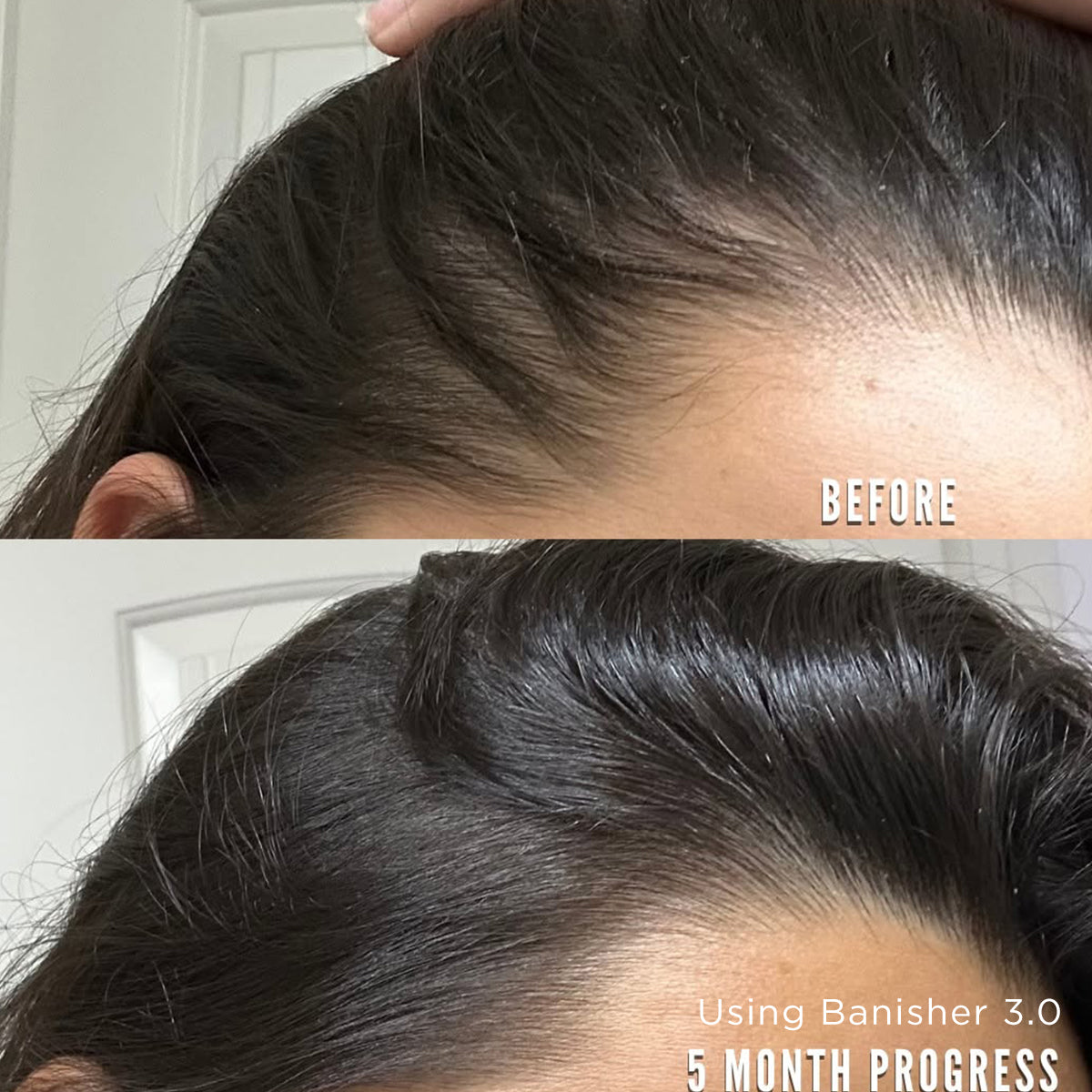
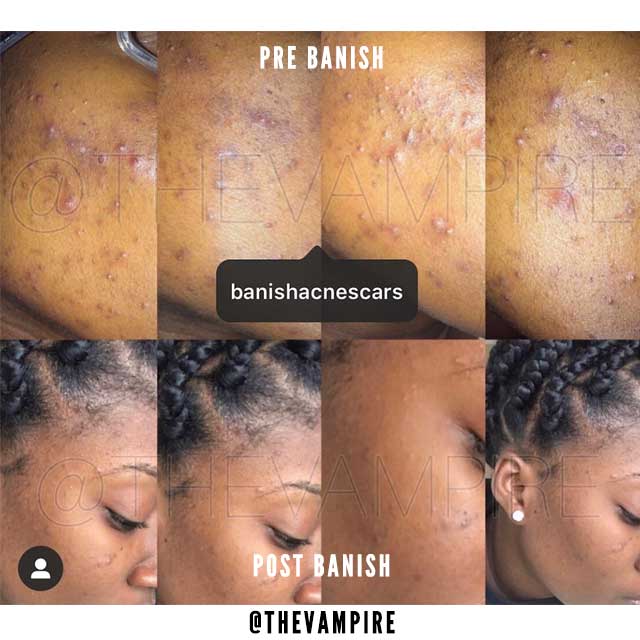
Before and After Hair Growth Image

Example from a woman showing improved hair density after consistent microneedling with the Banisher 3.0 for 5 months.
Final Thoughts
If you are looking for the best microneedling tool for hair growth, think beyond the tool itself. Think about diagnosis, depth, consistency, and the topical you pair it with.
A controlled stamp style device like the Banish Kit 3.0 can be a practical at home option when used thoughtfully. For deeper protocols or complex hair loss, medical guidance is the smarter move.
Microneedling can support hair growth in the right context. It works best when expectations are realistic and the routine is consistent.
References
- A Randomized Evaluator Blinded Study of Effect ...
- Microneedling in androgenetic alopecia; comparing two different ...
- Microneedling and its use in hair loss disorders: a systematic review
- Efficacy and safety of topical finasteride spray solution for male ...
- Adenosine increases anagen hair growth and thick hairs ... - PubMed
- Differential effects of caffeine on hair shaft elongation, matrix and ...
- Rosemary oil vs minoxidil 2% for the treatment of androgenetic ...
- Effect of Pumpkin Seed Oil on Hair Growth in Men with Androgenetic ...
- Friend or Foe? Saw Palmetto, a Systematic Review in Alopecia
- Peppermint Oil Promotes Hair Growth without Toxic Signs - PMC











Leave a comment
All comments are moderated before being published.
This site is protected by hCaptcha and the hCaptcha Privacy Policy and Terms of Service apply.