
If you spend some time watching videos on skincare, you have probably heard both of these terms: microneedling and nanoneedling. They sound almost identical, and a lot of people assume they are the same thing.
They are not.
Both techniques use tiny needles to stimulate the skin, but they work at completely different depths and serve different purposes. One focuses on deeper skin remodeling and collagen production. The other focuses mostly on boosting product absorption and surface level skin texture.
Understanding the difference matters. If you are trying to improve acne scars, wrinkles, or skin firmness, choosing the wrong technique can mean wasting months on treatments that never reach the layer of skin where significant change happens.
In this guide we will break down:
- What microneedling actually does inside the skin
- What nanoneedling does differently
- Which one works better depending on your goal
- What the scientific research says
- How at-home tools like the Banish Kit 3.0 can fit into a routine
Quick Summary: Nanoneedling vs Microneedling
| Treatment | Depth | Main Purpose | Best For |
|---|---|---|---|
| Nanoneedling | Very superficial (epidermis) | Enhancing skincare absorption | Glow, very mild texture, product delivery |
| Microneedling | Reaches dermis | Stimulates collagen and elastin | Acne scars, wrinkles, skin firmness |
What Is Microneedling?
Microneedling is a dermatologic procedure that creates controlled micro-injuries in the skin using tiny needles. These micro-channels trigger the body’s natural wound healing response.
When the skin repairs itself, it produces new collagen and elastin. This process is known as collagen induction therapy.
Scientific literature describes microneedling as a minimally invasive technique that activates the skin’s repair cascade by creating controlled punctures in the epidermis and dermis. This process stimulates fibroblasts and collagen remodeling in the skin.[1,2]
In clinical studies examining microneedling treatments, researchers observed:
- Increased collagen deposition
- Improved elastin structure
- Up to a 40% thickening of the epidermis in treated areas[3]
These changes were observed months after treatment, showing that microneedling can lead to long term skin remodeling.[3,4]
This is why microneedling is commonly used for:
- Acne scars
- Wrinkles and fine lines
- Enlarged pores
- Skin laxity
- Stretch marks
- Hair growth stimulation
Because the needles reach the dermis, the deeper layer where collagen lives, microneedling can actually change the structure of the skin over time.
What Is Nanoneedling?
Nanoneedling is a much more superficial treatment.
Instead of penetrating deep into the skin, nanoneedling uses extremely small tips designed to treat only the outermost layer of the skin, the epidermis.[1]
This means it does not create the same wound healing response that microneedling does.
Instead, nanoneedling mainly helps by:
- Temporarily increasing skincare absorption
- Improving surface level skin texture
- Giving a short term glow
- Helping active ingredients penetrate better
Because the treatment stays near the surface of the skin, it generally involves little to no downtime and rarely causes pinpoint bleeding.
However, the tradeoff is that nanoneedling does not reach the dermis where collagen remodeling occurs.
Why Depth Matters for Skin Results
The biggest difference between these two treatments is depth.
The skin has multiple layers:
- Epidermis (surface layer)
- Dermis (where collagen and elastin live)
- Subcutaneous tissue
Nanoneedling works primarily in the epidermis at 0.25mm or less.
Microneedling can reach the dermis at 0.5mm or more.
That distinction matters because collagen production happens deeper in the skin. Microneedling stimulates fibroblasts responsible for producing collagen and elastin during the wound healing process.[1,2]
That is why microneedling is typically used for structural skin concerns like acne scars and wrinkles, while nanoneedling is better suited for enhancing topical skincare results.
Which One Works Better?
The honest answer is that both have their place.
They just solve different problems.
Nanoneedling Is Better For
- Boosting serum absorption
- Improving mild texture
- Regular maintenance between treatments
- Sensitive skin routines
Microneedling Is Better For
- Acne scars
- Wrinkles and fine lines
- Skin firmness
- Stretch marks
- Large pores
Scientific reviews consistently show microneedling can significantly improve skin texture, wrinkles, and scars after multiple sessions.[4,5]
Because nanoneedling does not reach the dermis, it cannot stimulate the same level of collagen remodeling.
Can You Combine Nanoneedling and Microneedling?
Yes, and many experienced users actually alternate the two.
A simple routine often looks like this:
- Microneedling every 4 to 6 weeks for collagen stimulation
- Nanoneedling in between sessions to enhance skincare absorption
This approach allows the skin to remodel while still maintaining regular surface level improvements.
Using At-Home Tools
Professional clinics often charge hundreds of dollars per microneedling session. That is one reason at home tools have become popular.
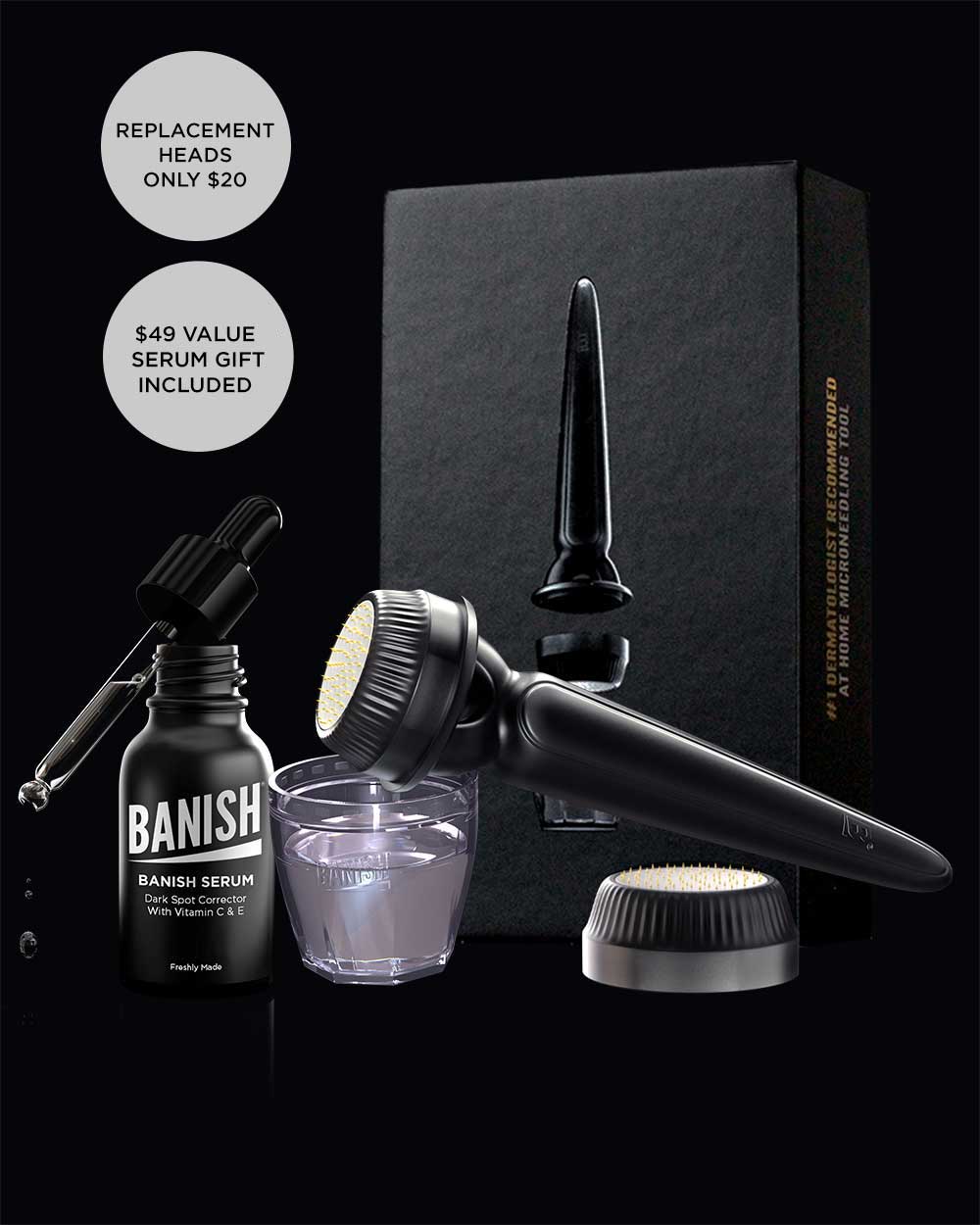
One example is the Banish Kit 3.0, which includes a gold plated titanium needle microneedling tool designed for controlled at home treatments.
The Banisher 3.0 can be used for both nano needling with the 0.25mm head and microneedling with the 0.5mm or 1.0mm head.
Many people use it to target:
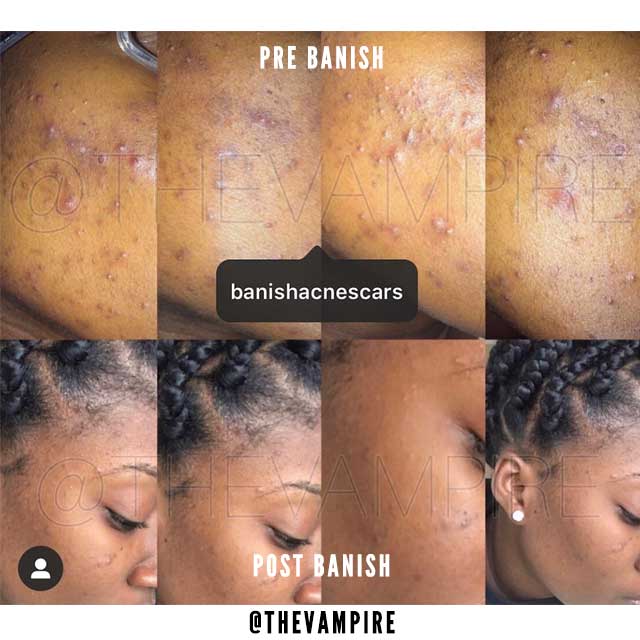
- Acne scars
- Uneven skin texture
- Fine lines
- Skincare absorption
The reason tools like this work is the same reason microneedling works in clinical settings. Controlled microchannels stimulate the skin’s repair process while also allowing topical ingredients like vitamin C or peptides to penetrate more effectively.[2,5]
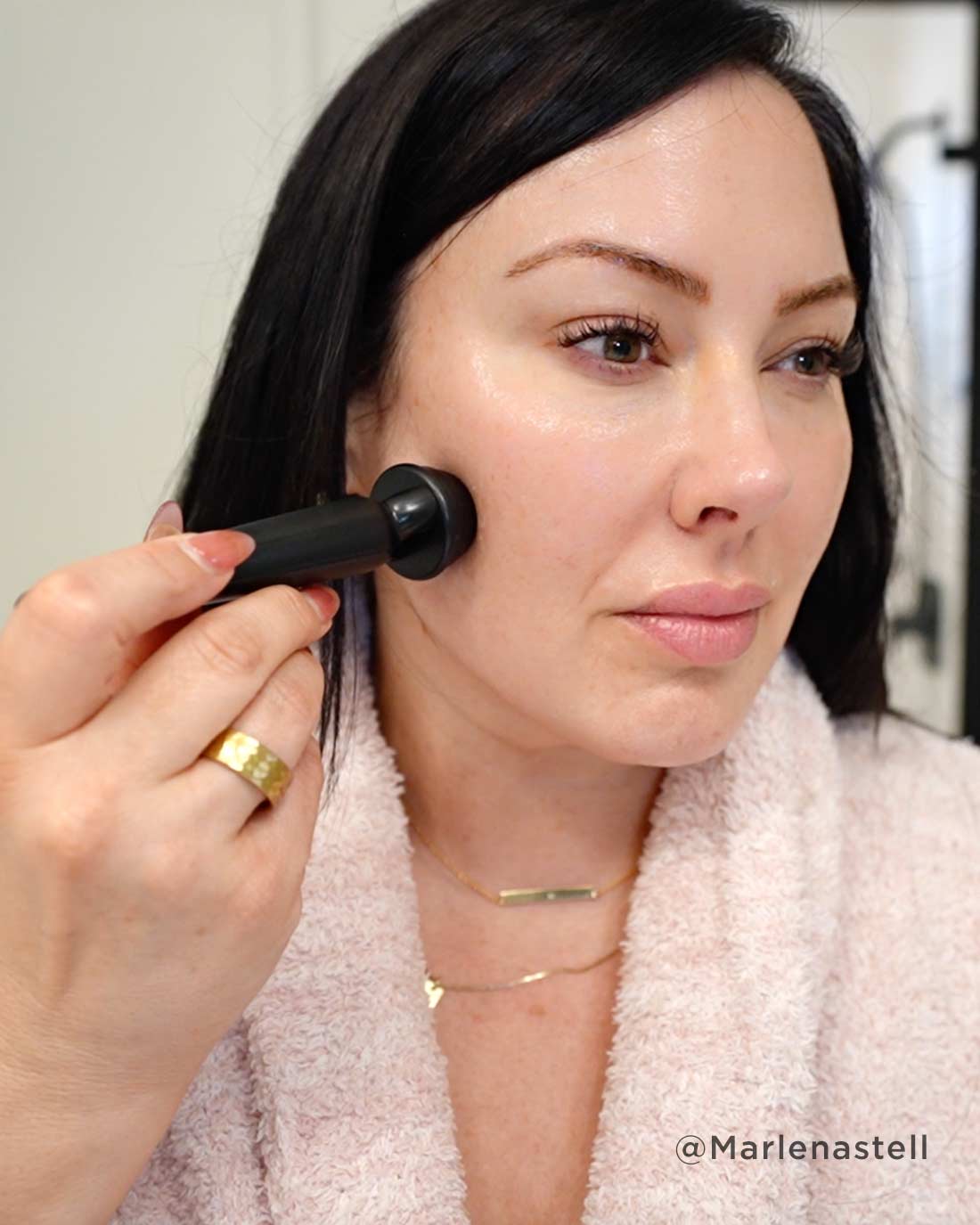
Some people also use gentler stamping method when they want a more nano style effect focused on product absorption.
Deeper treatments for collagen. Shallower treatments for skincare penetration.
Safety Considerations
Microneedling is generally considered a safe procedure when done correctly.
A systematic review of over 1,000 patients found that microneedling typically produces only mild temporary side effects such as redness or slight swelling.[4]
Still, proper hygiene and technique matter.
Some basic guidelines include:
- Always use clean, sanitized or sterile tools
- Do not microneedle over active infections or inflamed acne
- Allow proper healing time between sessions
- Use sunscreen or stay out of the sun afterwards
When done responsibly, microneedling remains one of the most studied minimally invasive skin treatments available today.
Final Thoughts
If you remember one thing, remember this:
Nanoneedling is mostly about skincare absorption
Microneedling is about structural skin remodeling.
Both can improve the skin, but they work at different depths and should be used for different goals.
If you are trying to improve acne scars, wrinkles, or skin firmness, microneedling is the technique with the strongest scientific evidence behind it.
If you want to enhance your skincare routine or boost the effects of serums, nanoneedling can be a useful addition.
Many experienced skincare users end up using both depending on what their skin needs at the time.
References
- Jaiswal S, Jawade S. Microneedling in Dermatology: A Comprehensive Review of Applications, Techniques, and Outcomes. Cureus. 2024;16(9):e70033. doi:10.7759/cureus.70033.
- Singh A, Yadav S. Microneedling: Advances and widening horizons. Indian Dermatol Online J. 2016;7(4):244-254. doi:10.4103/2229-5178.185468.
- Aust MC, Fernandes D, Kolokythas P, Kaplan HM, Vogt PM. Percutaneous collagen induction therapy: an alternative to laser resurfacing. Aesthetic Plast Surg. 2008;32(3):433-442. doi:10.1007/s00266-007-9061-z.
- Ramaut L, Hoeksema H, Pirayesh A, Stillaert F, Monstrey S. Microneedling: Where do we stand now? A systematic review of the literature. J Plast Reconstr Aesthet Surg. 2018;71(1):1-14. doi:10.1016/j.bjps.2017.06.006.
- Iriarte C, Kaur RR, Kontzias CR, Cohen JL. Review of applications of microneedling in dermatology. Clin Cosmet Investig Dermatol. 2017;10:289-298. doi:10.2147/CCID.S142450.
















Leave a comment
All comments are moderated before being published.
This site is protected by hCaptcha and the hCaptcha Privacy Policy and Terms of Service apply.