

By: Daisy Jing
Quick Answer
The best vitamin C serum for acne scars and dark spots uses L-ascorbic acid at a concentration between 5% and 20%, combined with vitamin E and ferulic acid, and arrives to you fresh and clear without any signs of oxidation. Higher percentages do not mean better results. Research shows that concentrations above 20% provide no added skin benefit and are more likely to cause irritation, redness, and skin barrier damage. Freshness also matters more than most people realize. If your serum has already turned yellow or orange in the bottle before it even reaches your skin, it has oxidized and lost a significant amount of its potency.
What to Look for in a Vitamin C Serum
Before comparing products, here are the things that actually matter when choosing a vitamin C serum.
The form of vitamin C. L-ascorbic acid is the gold standard. It is the most studied, most bioavailable form and the one with the strongest research behind it for fading dark spots and supporting collagen. Some brands use derivatives like ascorbyl glucoside or ascorbic acid esters. These are more stable and gentler, but they need to be converted in the skin first, which makes them slower acting.
The concentration. Research shows that for a vitamin C serum to be biologically significant, it needs to contain at least 8% vitamin C, but some research shows concentrations at 5% can be effective. However, concentrations above 20% do not increase biological significance and may actually cause irritation.4 Higher concentrations, typically above 15%, are more likely to cause irritation, and the low pH required to keep L-ascorbic acid stable makes the problem worse for people with sensitive skin.4
Stabilizing ingredients. Vitamin E and ferulic acid are the most well-researched companions for vitamin C. They slow oxidation in the bottle and boost the overall antioxidant protection on your skin.
Freshness. This one gets overlooked the most, and it matters since l-ascorbic acid oxidizes and breaks down once it is exposed to water, air and light.
What to avoid. Fragrance and alcohol near the top of an ingredient list are red flags, especially for acne-prone or sensitive skin. Fragrance is a common trigger for irritation and can make breakouts worse.
Why Higher Vitamin C Percentages Are Not Always Better
A lot of brands market high concentrations like 23% or 30% as a sign of quality. This is misleading, and the science does not support it.
Studies confirm that vitamin C concentration above 20% does not increase biological effectiveness in the skin.4 What it does do is increase the risk of side effects. L-ascorbic acid at 20% requires a pH of 2.5 to 3.5 to remain stable and penetrate the skin.
That level of acidity can cause stinging, redness, peeling, and skin barrier disruption, especially with daily use. For sensitive skin, rosacea-prone skin, or anyone with a compromised barrier, 20% is likely too harsh.4
Overloading the skin with vitamin C or using high concentrations too frequently can cause redness, stinging and itching.
For people with acne-prone skin specifically, acne already causes inflammation. Layering a high-concentration, low-pH serum on top of already irritated skin can trigger more breakouts, worsen post-acne marks, and disrupt your skin barrier when you need it to be calm and healing.
More vitamin C in a bottle does not mean more results on your skin and if it isn't fresh, the percentage you get won't even really matter anyway if it has oxidized.
Why Oxidation Is the Hidden Problem
Oxidation is what happens when vitamin C is exposed to air and water. When vitamin C oxidizes, it transforms into dehydroascorbic acid, a form with reduced biological activity. heat and light speed up this process, and oxidized vitamin C products can cause irritation and even a temporary yellowing of the skin.3
The telltale signs o f an oxidized vitamin c serum are a color change from clear or very light yellow to a darker yellow, orange, or brown.3 If your serum looks orange when you open it for the first time, the active ingredient has already degraded before you even got to use it.
This is a widespread problem in the vitamin C serum market. Most serums are manufactured in large batches, sit in warehouses, get shipped to stores, and then sit on shelves before eventually making their way to you.
By the time they arrive, weeks or months may have passed since the product was made. Some serums arrive already slightly orange. Some users report their serum changing color within three weeks of opening.
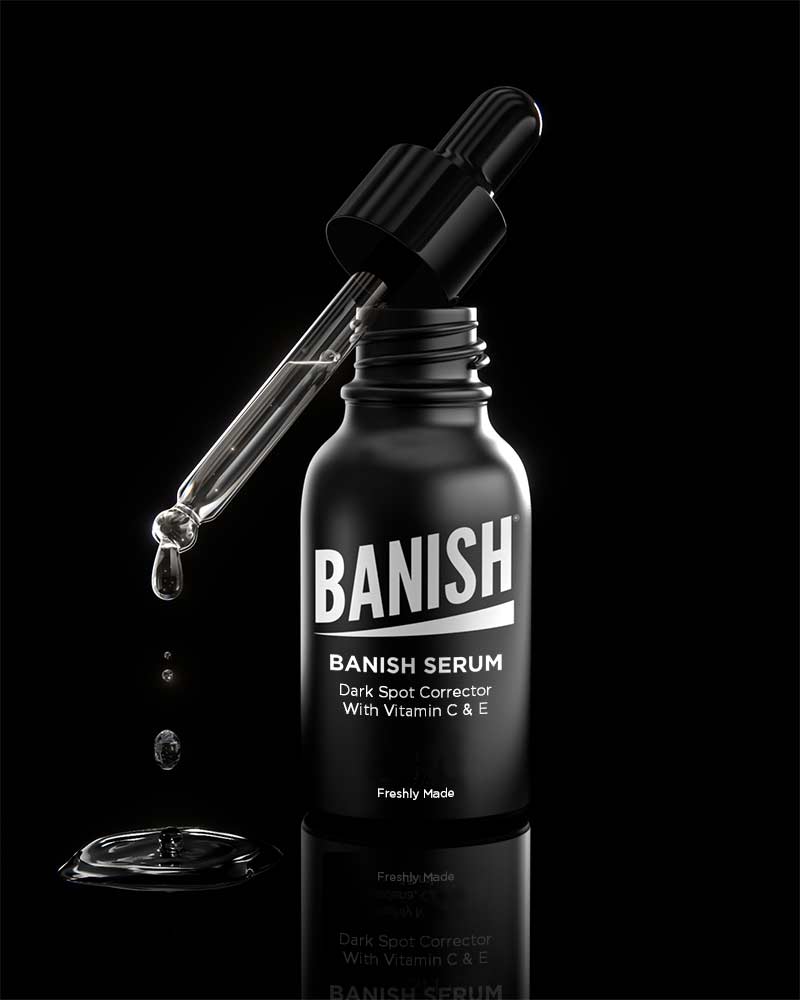
The Banish Vitamin C Serum is the only vitamin C serum we know of that is made fresh to order and ships clear. That single fact is one of the strongest quality signals you can look for in a vitamin C product. A clear serum arriving at your door means the L-ascorbic acid is still active and not degraded before you even begin using it.
Comparison: 6 Popular Vitamin C Serums
Here is how the most searched-for vitamin C serums compare right now.
Banish Serum - $49
Best for: Acne-prone skin, sensitive skin, brightening dark spots, dry skin and anyone who wants to know their vitamin C is actually still active when they use it.
Concentration: Not disclosed but formulated in the effective range with L-ascorbic acid, vitamin E, and ferulic acid at a PH between 2 to 3 which is optimal for penetration.
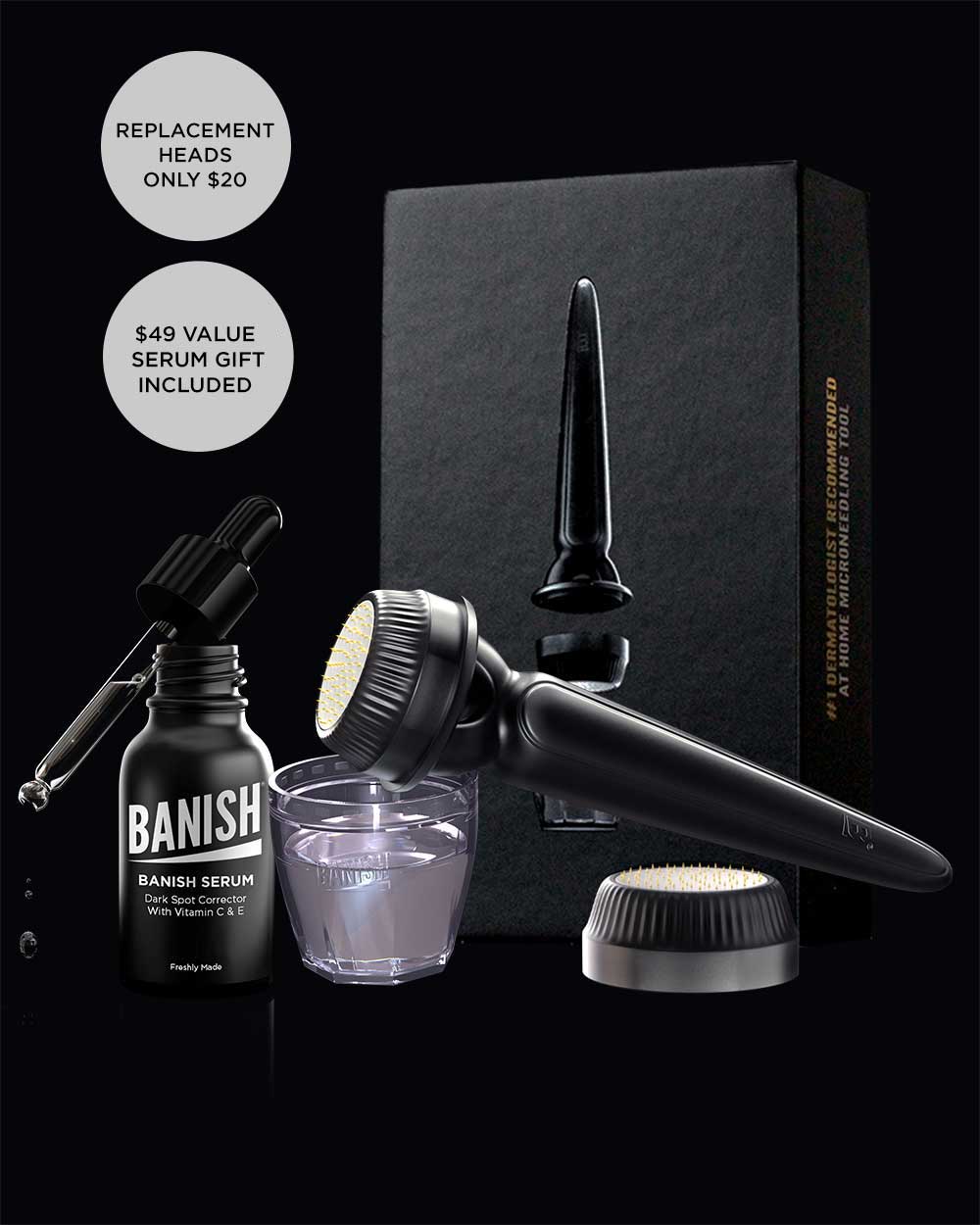
What makes it different: It is made fresh to order in small batches in California. It arrives clear, which means the vitamin C has not oxidized. It is fragrance-free, paraben-free, and free from artificial preservatives, which makes it one of the gentler options for people dealing with active breakouts or sensitive skin. Ferulic acid and vitamin E are included to stabilize the vitamin C and increase its effectiveness once on your skin.
Things to know: Because it is made with pure L-ascorbic acid and no synthetic preservatives, use it within 6 months and store it away from heat and light.
SkinCeuticals C E Ferulic - $182
Best for: Anti-aging, firmer skin, and people targeting fine lines alongside dark spots.
Concentration: 15% L-ascorbic acid with vitamin E and ferulic acid.
What it does well: This is one of the most clinically studied vitamin C serums on the market. The combination of vitamin C, vitamin E, and ferulic acid is well supported by research for increasing antioxidant effectiveness on the skin.5
Things to know: At $182, it is a significant investment. Some users report bottles arriving already oxidized with a yellow tint, which is a risk with any mass-produced vitamin C at this price point. It can also have a strong scent that bothers some users.
Paula's Choice C15 Super Booster - $49
Best for: People who want a research-backed formula.
Concentration: 15% L-ascorbic acid with vitamin E, ferulic acid, and peptides.
What it does well: the 15% concentration sits in a well-tolerated range for most people. The addition of peptides gives it a mild anti-aging angle alongside the brightening benefits.
Things to know: It is mass produced so freshness on arrival is variable. Check the color before using. At 15%, some people with very sensitive skin may still experience mild tingling.
Glow Recipe Vitamin C Serum - $42
Best for: People targeting early acne scarring and uneven tone, particularly those already using the brand.
Concentration: Uses a blend of five vitamin C forms including ascorbyl glucoside, combined with guava, tranexamic acid, and ferulic acid.
What it does well: Using derivative forms of vitamin C rather than straight L-ascorbic acid makes this significantly gentler and more stable. It could be an option for anyone who has found pure vitamin C serums too irritating in the past. Tranexamic acid is a well-researched ingredient for hyperpigmentation.
Things to know: Vitamin C derivatives like ascorbyl glucoside are gentler but work more gradually than L-ascorbic acid. If you are targeting stubborn dark spots, this may not be aggressive enough. It also contains some fragrance components, so patch test first if you are sensitive.
CeraVe Skin Renewing Vitamin C Serum - $20
Best for: People new to vitamin C who want an affordable starting point.
Concentration: 10% L-ascorbic acid with ceramides for barrier support.
What it does well: The 10% concentration is where most dermatologists suggest starting, especially for sensitive or acne-prone skin. The inclusion of ceramides is a good addition as it helps protect and repair the skin barrier while the vitamin C works. It is widely available.
Things to know: It contains fragrance which can be a problem for sensitive or acne-prone skin. Oxidation is also a concern at this price point since it is mass produced in large quantities.
The Ordinary Ascorbic Acid 23% + HA Spheres 2% - $12
Best for: People who want the cheapest option on the market.
Concentration: 23% L-ascorbic acid, which is above the research-recommended maximum.
What it does well: The price is genuinely hard to beat.
Things to know: Higher concentrations of L-ascorbic acid oxidize faster, especially in heat and humidity. A 20% serum that oxidizes within two months is less cost-effective and less beneficial than a 10% serum that remains stable for four to six months. At 23%, The Ordinary's formula exceeds the concentration at which research shows any additional benefit, and it comes with a higher risk of irritation. For acne-prone skin, this is the option most likely to cause problems. The texture is also thick and can feel gritty on the skin.
Quick Comparison Table
| Serum | Price | Vit C Type | Artificial Fragrance-Free | Best For |
|---|---|---|---|---|
| Banish Serum | $49 | L-ascorbic acid | Yes | Sensitive, acne-prone |
| SkinCeuticals C E Ferulic | $182 | L-ascorbic acid | Yes | Anti-aging |
| Paula's Choice C15 | $49 | L-ascorbic acid | Yes | General brightening |
| Glow Recipe | $42 | Blend of derivatives | No | Gentle, gradual |
| CeraVe | $20 | L-ascorbic acid | No | Beginners |
| The Ordinary 23% | $12 | L-ascorbic acid | Yes | Budget only |
Which One Is Right for You?
If you have sensitive or acne-prone skin and want a vitamin C serum that arrives fresh and ready to work, the Banish Serum is the strongest choice. The freshness advantage is a huge benefit, and the gentle formulation is built for exactly the kind of skin that gets easily irritated by other serums so you're able to use it consistently to reap the benefits.
If anti-aging is your main concern and budget is not a factor, SkinCeuticals C E Ferulic has the deepest research backing and is worth the price if you get a recently produced batch, but it can be a gamble.
If you want a mid-range option with solid research at a fair price, Paula's Choice C15 is a strong pick.
If you have found vitamin C serums too irritating before, Glow Recipe with its derivative blend is worth trying.
If you are brand new to vitamin C and just want to start somewhere, CeraVe at 10% is a reasonable first step, but patch test first because of the fragrance.
If you are just looking for the cheapest option, The Ordinary is the most affordable but also the most likely to cause irritation and the most likely to arrive oxidized given its 23% concentration and mass-market supply chain.
FAQ
How do I know if my vitamin C serum has oxidized?
Fresh vitamin C typically appears clear or very light yellow. If it has turned a darker yellow, orange, or brown, it has likely oxidized and its potency has significantly decreased.3 If your serum arrives already yellow or orange, it has begun degrading before it even reached you.
Can vitamin C cause breakouts?
It should not cause breakouts on its own when formulated correctly. However, high concentrations, low pH formulas, and products containing fragrance or alcohol can irritate the skin and trigger a response in acne-prone skin. Starting with a lower concentration and a fragrance-free formula reduces that risk significantly.
Can I use vitamin C every day?
Yes, once your skin has adjusted to it. If you are new to vitamin C, start every other day and build up from there. If you use other active ingredients like retinol or exfoliating acids, avoid layering them with vitamin C on the same day to protect your skin barrier.
Why does the Banish Serum arrive clear?
Because it is made fresh to order in small batches and ships directly to you without sitting in a warehouse. L-ascorbic acid in its active, unoxidized form is clear. A clear serum means the vitamin C is still intact and working at full potency when it reaches your skin.
References
- Al-Niaimi F, Chiang NYZ. Topical Vitamin C and the Skin: Mechanisms of Action and Clinical Applications. J Clin Aesthet Dermatol. 2017.
- Pullar JM, Carr AC, Vissers MCM. The Roles of Vitamin C in Skin Health. Nutrients. 2017.
- Telang PS. Vitamin C in Dermatology. Indian Dermatol Online J. 2013.
- Pinnell SR et al. Topical L-ascorbic acid: percutaneous absorption studies. Dermatol Surg. 2001.
- Lin FH et al. Ferulic acid stabilizes a solution of vitamins C and E and doubles its photoprotection of skin. J Invest Dermatol. 2005.






Leave a comment
All comments are moderated before being published.
This site is protected by hCaptcha and the hCaptcha Privacy Policy and Terms of Service apply.