

Summary: Vitamin C, specifically L-ascorbic acid, is one of the most beneficial ingredients to apply after microneedling because it plays a direct role in collagen synthesis during the skin's repair phase. Microneedling creates the stimulus for new collagen production; vitamin C provides a key cofactor the skin needs to actually build it. The temporary microchannels created during treatment also allow L-ascorbic acid to penetrate more effectively than on untreated skin, improving its impact on pigmentation, elasticity, and overall skin texture. Research shows that combining microneedling with a vitamin C serum produces better outcomes than microneedling alone.
If you microneedle at home or get professional treatments, you have probably heard people talk about pairing it with vitamin C. There is a good reason for that.
Microneedling works by creating tiny controlled micro-injuries in the skin. Your body responds by kicking off a wound-healing process that produces new collagen and elastin. These are the proteins that help skin look smoother, firmer, and more even.[5][3]
Now here is where vitamin C becomes especially interesting.
The most researched form of vitamin C in skincare is L-ascorbic acid, and it plays a direct role in collagen formation.[5][3] When you combine microneedling with vitamin C, you are essentially giving the skin one of the key nutrients it needs while it is actively rebuilding.
In simple terms, microneedling creates the signal for new collagen, and vitamin C helps the body actually build it. Let’s break down why this pairing works so well.
Research shows that combining microneedling with serums containing vitamin C can enhance improvements in skin elasticity, pigmentation, and visible signs of aging compared with microneedling alone.
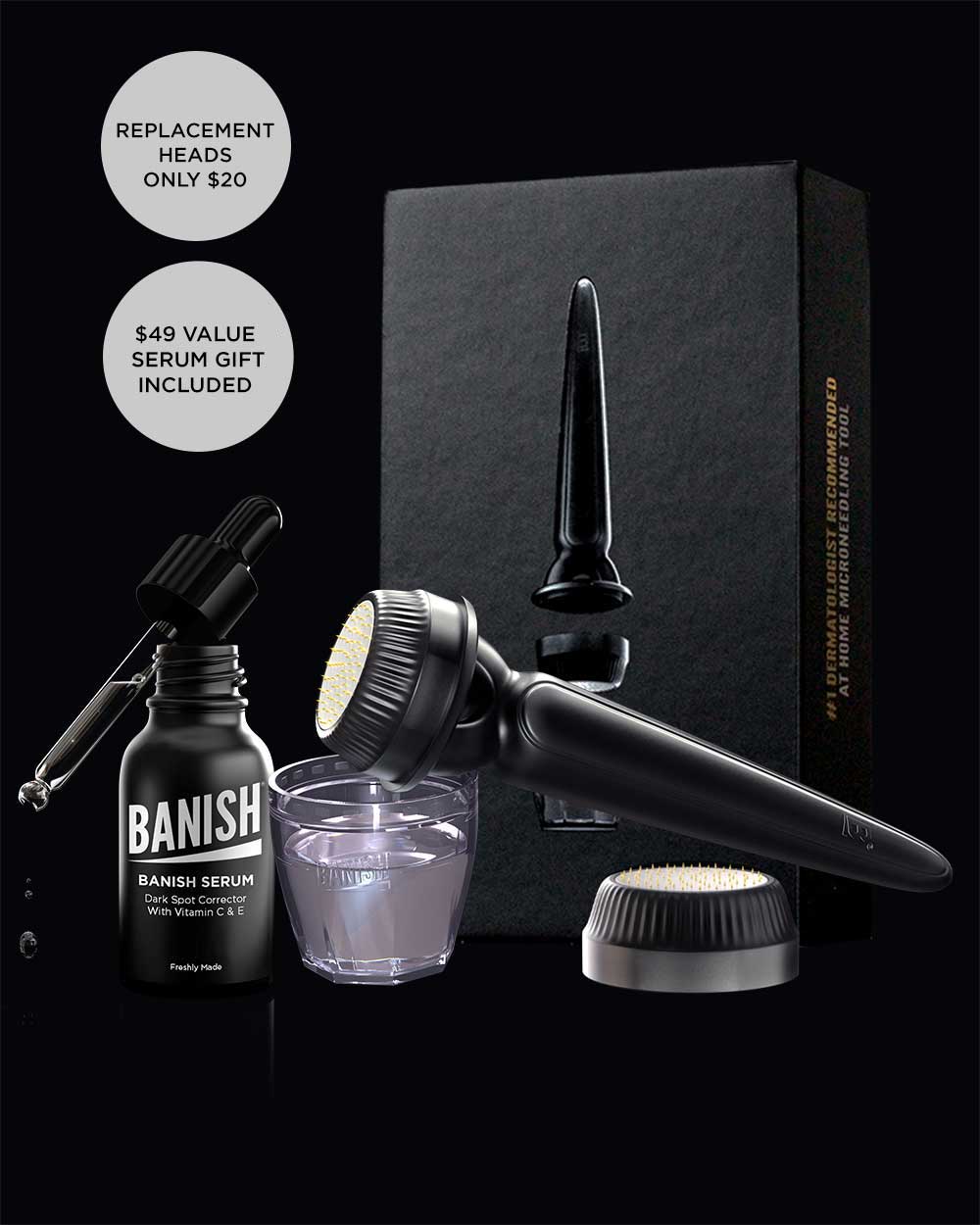
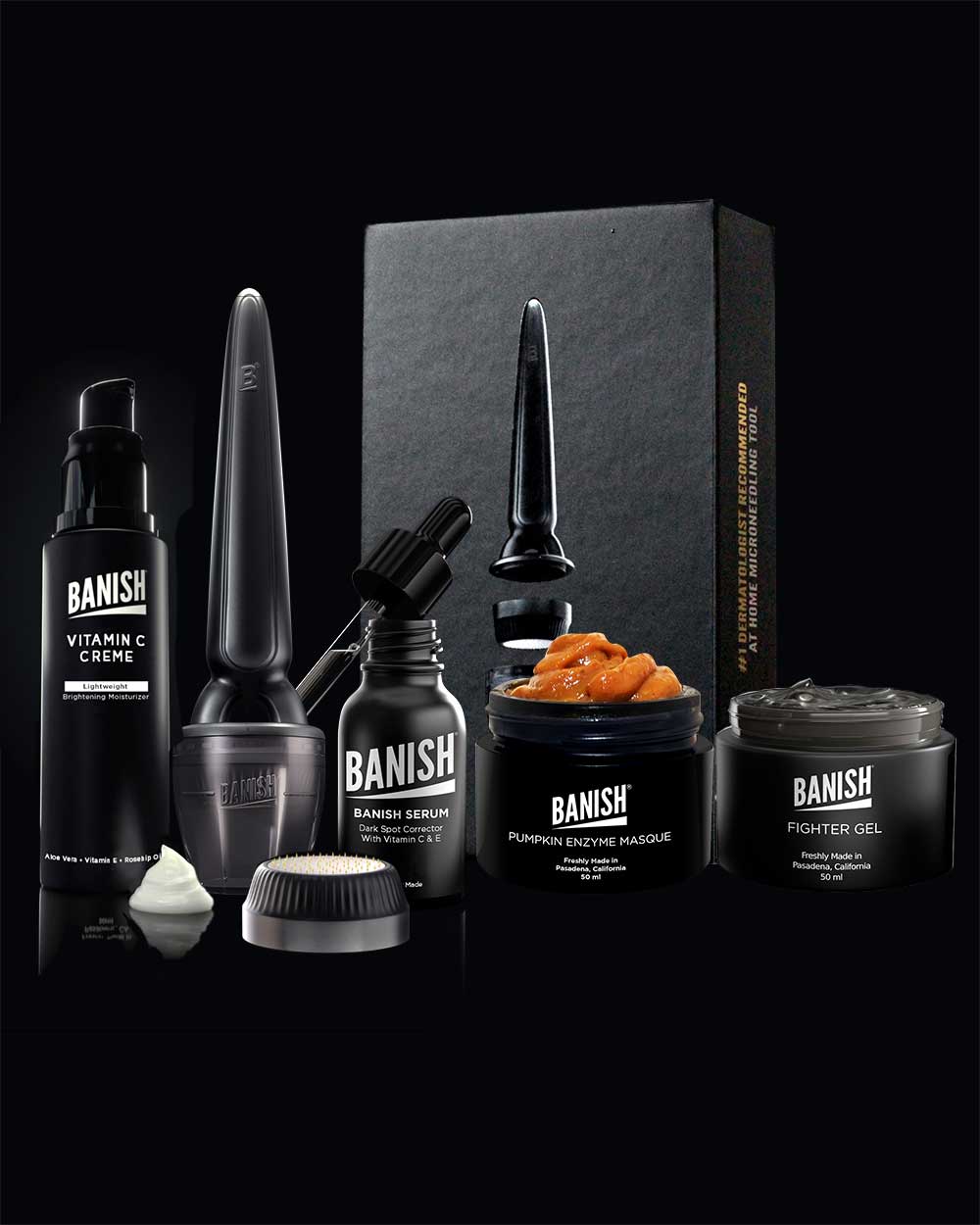
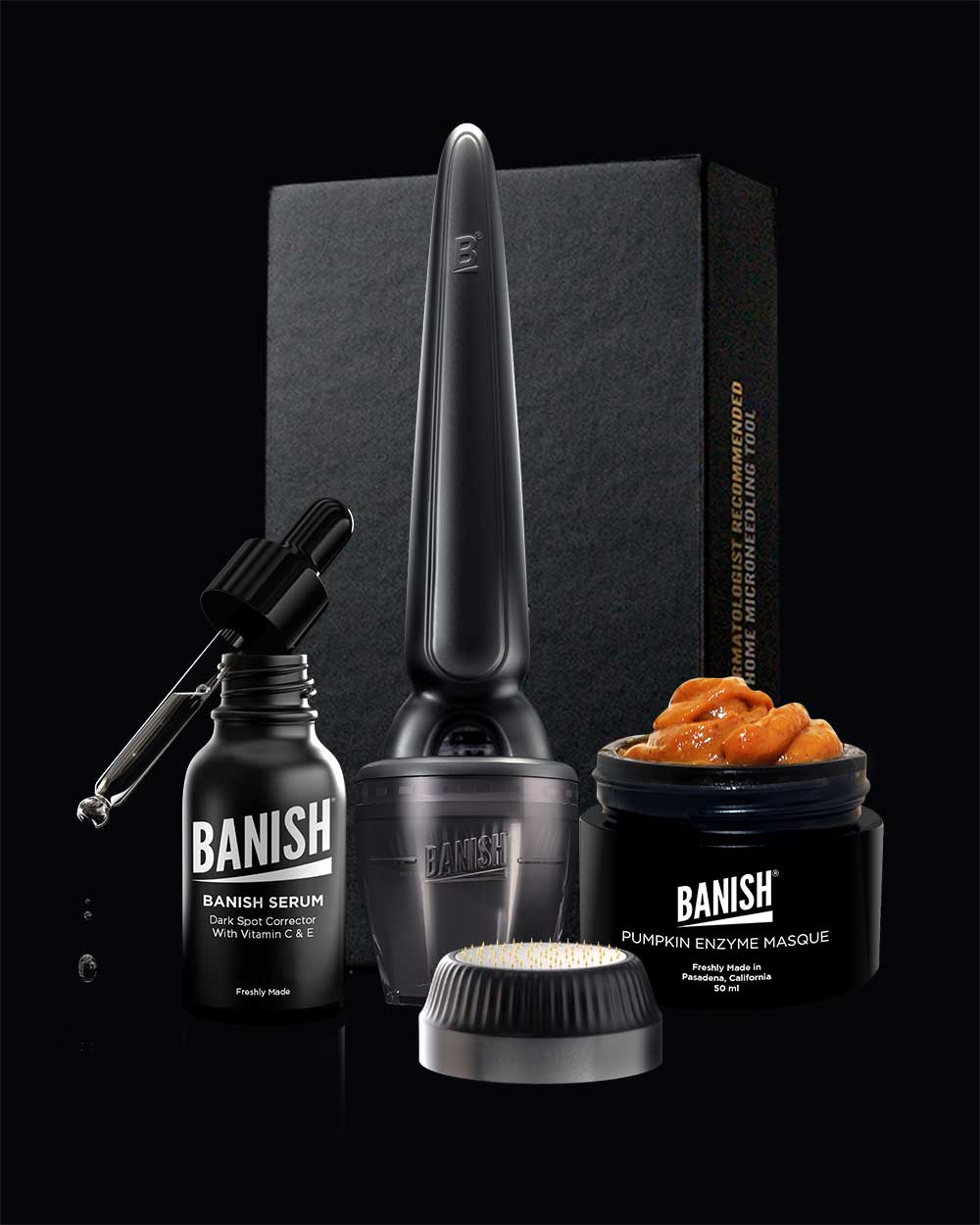
The Banish Kit 3.0 is designed around this concept by pairing a microneedling stamp tool with a vitamin C serum formulated with L-ascorbic acid and ferulic acid. The microneedling tool helps stimulate collagen and create temporary microchannels in the skin, while the vitamin C serum helps support collagen formation and antioxidant protection during the skin’s natural repair process.
What Microneedling Actually Does to Your Skin
Microneedling is often called collagen induction therapy.[6]
Tiny needles create microscopic channels in the skin that trigger a natural repair process. This activates fibroblasts and growth factors that help produce new collagen and elastin.[6]
Over time, this process can help improve:
- Acne scars
- Fine lines and wrinkles
- Uneven skin texture
- Enlarged pores
- Hyperpigmentation
Studies show collagen and elastin production can increase after microneedling treatments,[6] which is why results tend to improve gradually over time rather than all at once.
But the microchannels created during treatment also do something else.
They temporarily allow topical ingredients to penetrate the skin more effectively.[4][2]
That is where vitamin C comes in.
Why L-Ascorbic Acid Works So Well After Microneedling
Not all vitamin C ingredients are the same. The form with the strongest clinical evidence is L-ascorbic acid, which is the pure active form of vitamin C.
This molecule plays several important roles in skin repair.
1. It Helps Support Collagen Production
Vitamin C is a required cofactor in the enzymatic reactions that stabilize and form collagen fibers. Without enough vitamin C, collagen production becomes less efficient.[5][3]
Research has also shown that topical vitamin C can support collagen-related activity in skin cells,[3] which helps make it especially useful in routines focused on skin repair and firmness.
When used after microneedling, vitamin C supports the exact process the treatment is trying to stimulate.
2. Microneedling Helps Vitamin C Reach the Skin More Effectively
One limitation of skincare is that the outer layer of skin blocks many ingredients from penetrating deeply.
Microneedling temporarily creates microchannels that can enhance the delivery of topical actives like vitamin C.[4][2]
This is one of the reasons microneedling is often discussed as a transdermal delivery method.[4][2]
Instead of just sitting on the surface, ingredients like L-ascorbic acid may have a better chance of reaching the areas where collagen-supporting activity matters most.
3. Studies Suggest Better Results When Vitamin C Is Combined With Microneedling
Research continues to support the synergy between microneedling and vitamin C.
Clinical studies evaluating microneedling combined with antioxidant treatments that include vitamin C have reported improvements in skin elasticity, visible photoaging, wrinkles, and pigmentation.[1][6]
This combination makes sense because microneedling stimulates repair, while vitamin C helps support collagen formation and provides antioxidant protection.
Why Ferulic Acid Makes Vitamin C Even Better
You will often see vitamin C serums paired with ferulic acid.
That is not just a trend. There is a practical reason for it.
Ferulic acid is an antioxidant that can help stabilize L-ascorbic acid and improve how well the formula performs.[1][7] When used together, antioxidants like vitamin C and ferulic acid can support skin rejuvenation and help protect skin from oxidative stress.[1][7]
This matters after microneedling because newly healing skin is going through a repair process, and antioxidant support can be beneficial during that time.
Vitamin C Compared With Other Ingredients Used With Microneedling
Microneedling can be paired with several different topical ingredients. Here is how vitamin C compares.
Vitamin C (L-Ascorbic Acid)
Benefits include:
- Supports collagen production
- Helps brighten the look of skin
- Can help improve the appearance of hyperpigmentation
- Provides antioxidant protection
This is one of the most researched combinations for people focused on skin tone, texture, and long-term collagen support.
Platelet Rich Plasma (PRP)
PRP is often used in professional settings and relies on growth factors from your own blood. It can be effective, but it is more involved, more expensive, and not practical for most at-home routines.
Hyaluronic Acid
Hyaluronic acid is useful for hydration and can help skin feel more comfortable and plump. But it does not play the same direct role in collagen synthesis that L-ascorbic acid does.
Why Many People Use Vitamin C With At-Home Microneedling
For people microneedling at home, the goal is usually long-term skin improvement without making the routine overly complicated.
That is where combining microneedling with a well-formulated vitamin C serum can make a lot of sense.
The key is using:
- A safe needle depth that correlates with the area you're microneedling
- A high-quality L-ascorbic acid serum
- Consistent treatments over time
For beginners, many people prefer a manual stamp-style tool over an automated device because it gives better control over pressure and placement and helps reduce dragging across the skin.
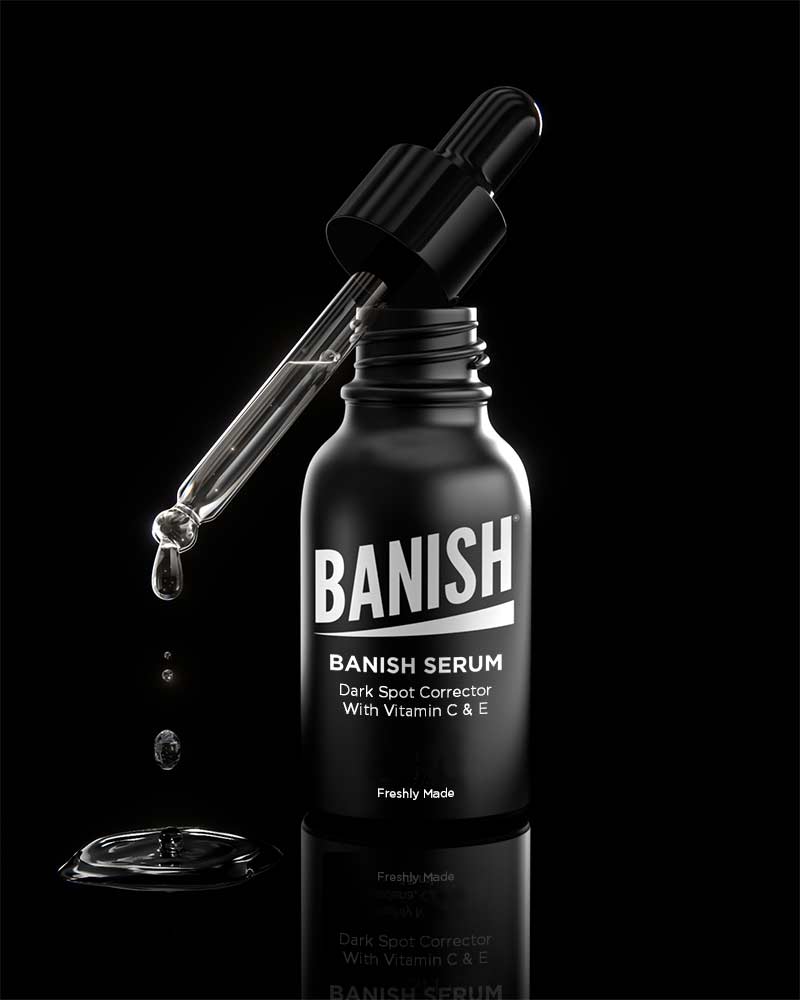
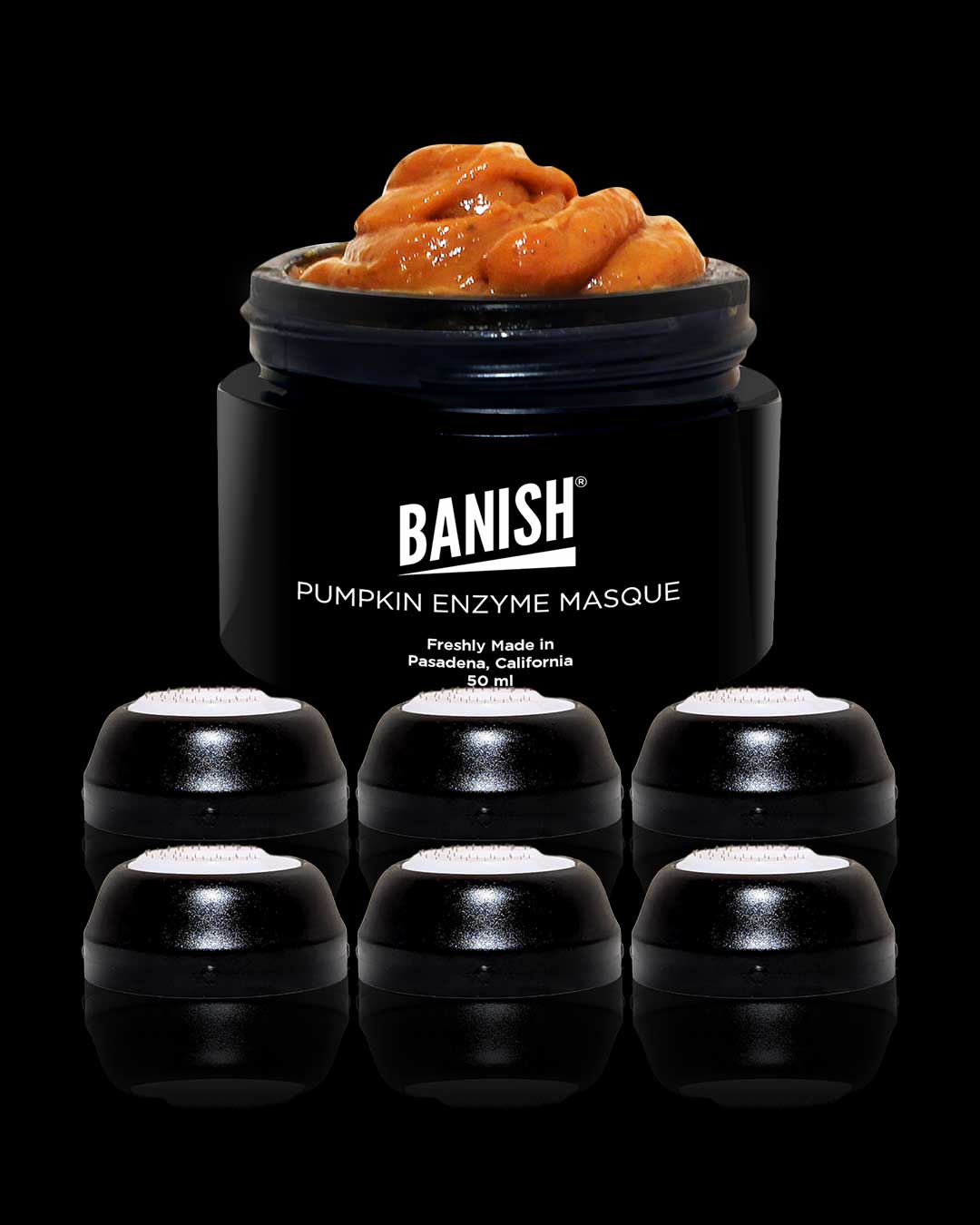
One option that fits naturally into this type of routine is the Banish Kit 3.0, which pairs a microneedling tool with a vitamin C serum called the Banish Serum that is made fresh to order and contains L-ascorbic acid and ferulic acid.
The routine is straightforward:
Microneedle to stimulate collagen, then apply vitamin C to support the skin as it repairs.
When to Use Vitamin C After Microneedling
Some dermatologists are cautious about applying strong actives immediately after aggressive in-office treatments because the skin barrier is temporarily more vulnerable, and product sterility matters more.
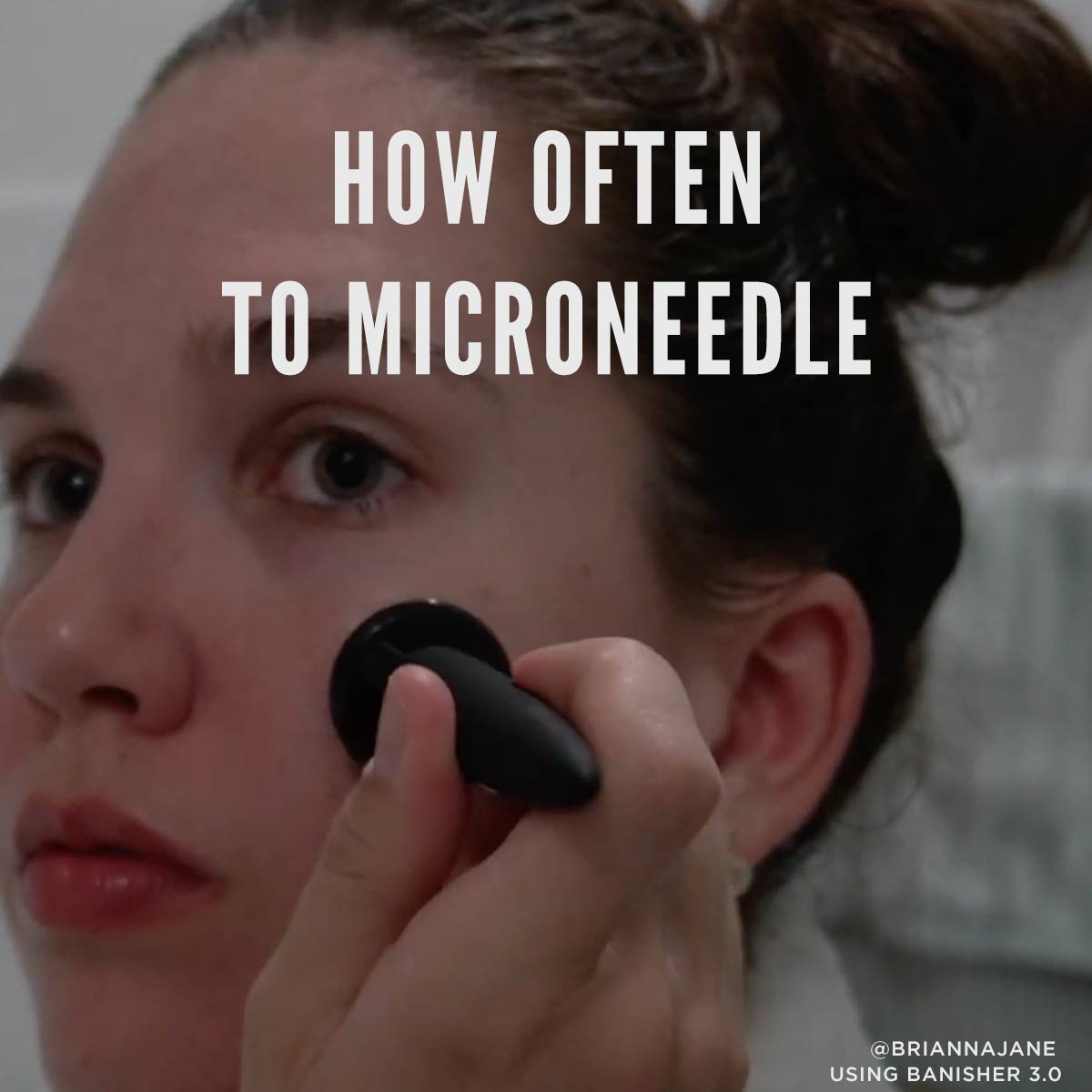
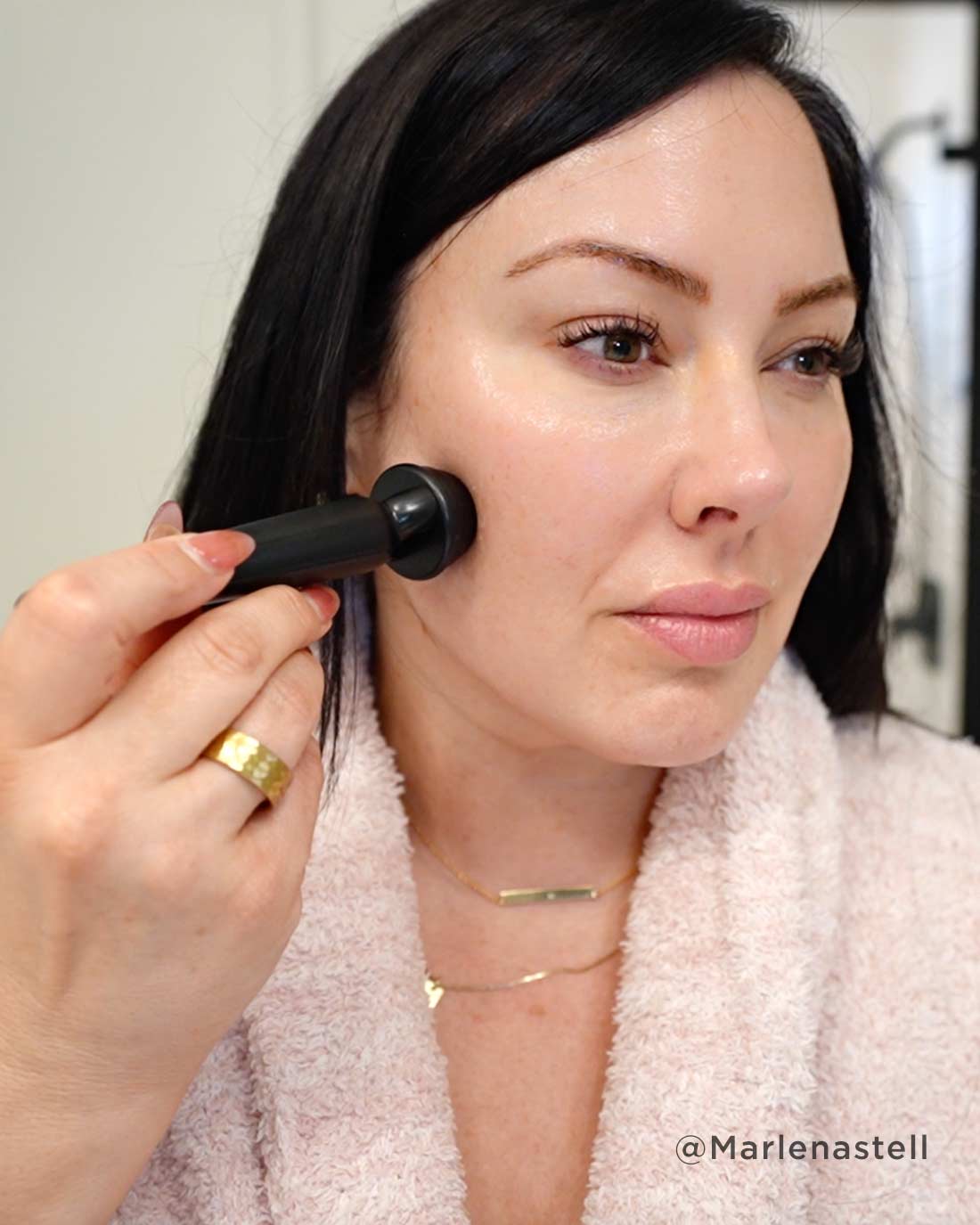
That said, with at-home microneedling depths such as 0.5 mm using a safe device like the Banisher 3.0, many people use vitamin C as part of their post-treatment routine to support collagen formation.
A simple approach looks like this:
- Microneedle on clean skin
- Apply a fresh L-ascorbic acid serum
- Follow with a soothing moisturizer if needed
It is still smart to avoid harsher ingredients like retinoids or exfoliating acids right after microneedling unless a professional has told you otherwise.
What Kind of Results Can You Expect?
Microneedling is not an overnight treatment.
Skin remodeling takes time.
Most people notice gradual improvements in:
- Acne scars
- Skin texture
- Fine lines
- Overall brightness
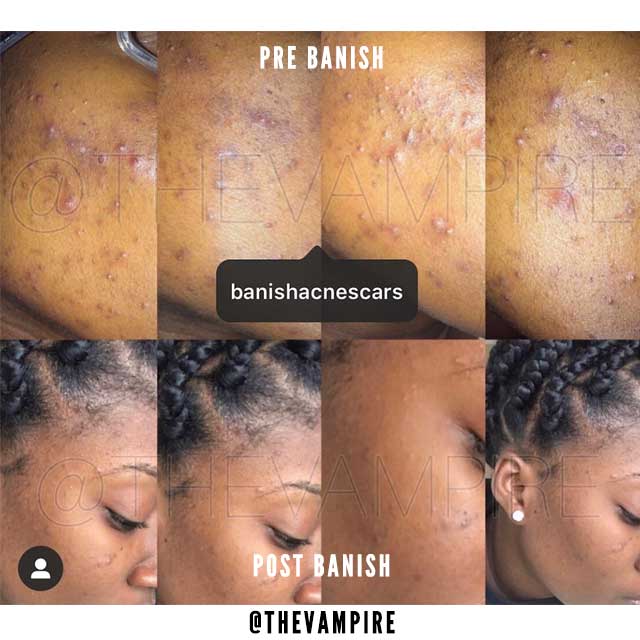
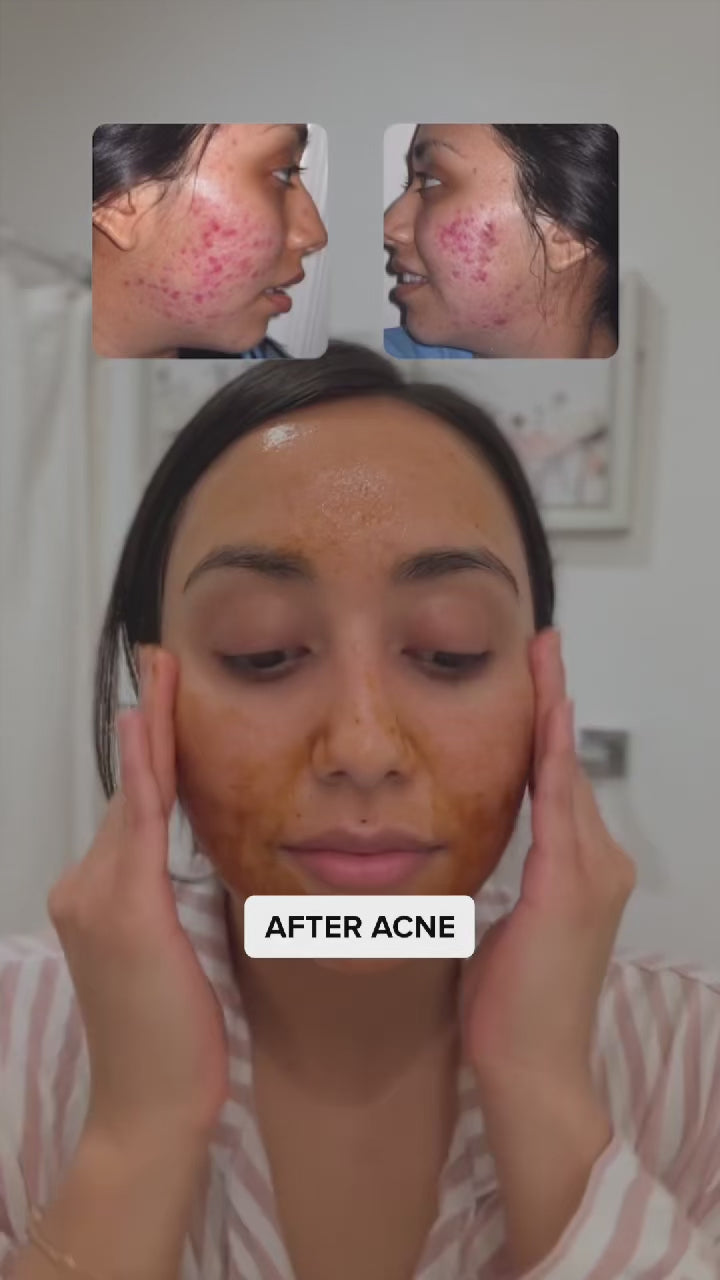
This happens because collagen remodeling continues over time after treatment. Majority of people can see clear visible results within the first 6 months of microneedling at home with a vitamin c serum.
Vitamin C supports this process by helping the skin build collagen while also improving visible brightness and providing antioxidant support.
Final Thoughts
If you are looking for an ingredient that truly complements microneedling, (L-ascorbic acid) vitamin C is one of the best-supported options to consider.
Microneedling stimulates the skin to repair itself and produce new collagen. Vitamin C helps support that repair process.
Research suggests that combining microneedling with antioxidant serums containing vitamin C can improve skin elasticity, pigmentation, and overall rejuvenation compared with microneedling alone.[1]
That is why so many skincare routines pair microneedling with vitamin C serums, especially formulas that combine L-ascorbic acid with ferulic acid.
When used consistently and correctly, this combination can be a strong option for supporting smoother, firmer, and healthier-looking skin over time.
References
- Liu, C., Boo, J., Kim, H., Hwang, S., Yan, X., et al. (2026). A Double-Blinded, Split-Face Clinical Trial Evaluating the Effects of a Vitamin C, E, and Ferulic Acid Serum Combined with Microneedling on Facial Photoaging. Clinical, Cosmetic and Investigational Dermatology. https://pmc.ncbi.nlm.nih.gov/articles/PMC12912124/
- Pazyar, N., Raeispour, M., Yaghoobi, R., et al. (2023). Comparison of microneedling with tranexamic acid in comparison with microneedling with vitamin C in the treatment of melasma: A prospective and single-blind clinical trial. Health Science Reports. https://onlinelibrary.wiley.com/doi/abs/10.1002/hsr2.1636
- Boo, Y. C. (2022). Ascorbic Acid (Vitamin C) as a Cosmeceutical to Increase Dermal Collagen for Skin Antiaging: A Review. Antioxidants, 11(9), 1663. https://www.mdpi.com/2076-3921/11/9/1663
- Hamed, R., et al. (2024). Microneedles mediated-dermal delivery of Vitamin C. Heliyon. https://pmc.ncbi.nlm.nih.gov/articles/PMC11407233/
- Pinnell, S. R. (1985). Regulation of collagen biosynthesis by ascorbic acid: a review. The Yale Journal of Biology and Medicine, 58(5), 553–559. https://pmc.ncbi.nlm.nih.gov/articles/PMC2589959/
- Current understanding of microneedling procedures for acne skin: a narrative review. (2024). Cosmetics, 11(6), 193. https://www.mdpi.com/2079-9284/11/6/193
- Ferulic Acid: A Review of Its Pharmacology, Pharmacokinetics and Derivatives. (2018). Molecules, 23(12), 3294. https://www.ncbi.nlm.nih.gov/pmc/articles/PMC6270224/












Leave a comment
All comments are moderated before being published.
This site is protected by hCaptcha and the hCaptcha Privacy Policy and Terms of Service apply.